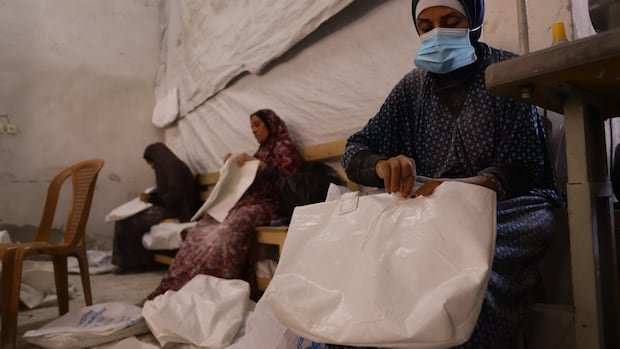
In Gaza City’s factory, numerous women are seated, meticulously working on transforming bags of flour into tote bags. With focused precision, they fold, cut, and sew the sacks to create the final product. Meanwhile, in another area of the factory, additional women diligently manage the final steps, pairing up at sewing machines to attach handles to the bags.
Engaged in a cash-for-work initiative, these women are part of a program facilitated by the UN World Food Programme (WFP) since April. Their task involves repurposing aid supplies, such as bags of flour and wood pallets, into usable products. Participants earn 1,000 shekels per month for their three-month employment stint.
While the compensation covers only a week’s worth of essential expenses for some families, it serves as a valuable source of income and purpose in a region deeply affected by conflict. Warda Aliwa, 38, expressed her gratitude for the opportunity, emphasizing the importance of utilizing the aid materials effectively.
For Nisreen Abbas, 54, the job provides a means to support her large family, including her grandchildren and elderly husband. Despite the temporary nature of the work, it offers a lifeline in a region grappling with economic devastation following years of conflict.
The project coordinator, Faten Abu Sharkh, highlighted the transformative impact of the program on the participants’ lives, noting the positive changes in their financial, social, and mental well-being. Amidst the economic challenges and limited access to goods in Gaza, the initiative not only offers financial stability but also a sense of normalcy and hope for a better future.
As participants like Khaled al-Kurd, 50, rebuild their lives after significant personal losses, the program serves as a beacon of stability and support. While the participants’ tenure with the WFP is temporary, the desire for program renewal underscores the profound impact it has had on their lives, providing a ray of hope in the midst of adversity.