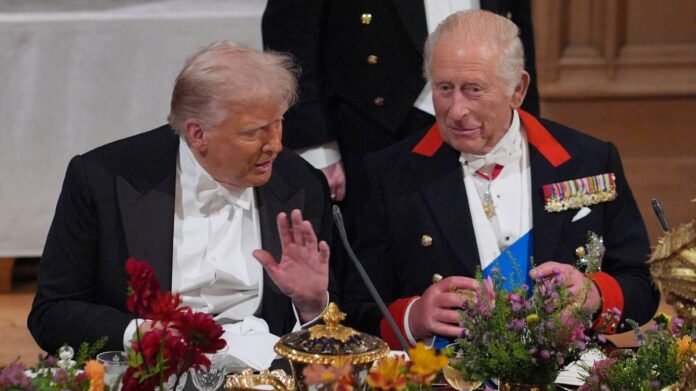
The King’s recent involvement in addressing Donald Trump’s disrespectful remarks regarding British heroes’ war efforts showcases his relevance as a modern monarch.
The traditionally non-political stance of our monarch has been broken during a critical moment.
Charles has acknowledged the shift in his role from Prince of Wales to King, emphasizing a change in approach towards political matters compared to his past actions two decades ago.
Examining the facts reveals that Charles, in previously undisclosed correspondence, urged then-Prime Minister Tony Blair and key government officials to address urgent issues such as improving military equipment for troops in Iraq and promoting alternative herbal medicines in the UK.
In a series of 27 memos obtained after a prolonged Freedom of Information battle, Charles advocated against mistreatment of farmers by supermarkets and suggested improvements in hospital design, with his aide directly briefing Downing Street on these matters.
Known for his strong convictions on environmental issues, climate change, military affairs, and preserving national traditions, Charles expressed his personal indignation over the US President’s comments questioning the bravery and sacrifice of the Armed Forces he represents as Commander in Chief.
Not shying away from holding those accountable for environmental harm, advocating for global climate change strategies, and now influencing Trump to retract his controversial statements, the King’s actions demonstrate a proactive stance rather than passive observance.
During the World Economic Forum summit in Davos, Switzerland, Trump’s criticism of NATO allies sparked global outrage as he questioned their contributions and commitment to collective defense efforts.
Trump’s remarks drew condemnation from world leaders, military officials, and families of fallen soldiers, highlighting the significance of international alliances and military cooperation.
As the only nation to invoke Article 5 of the NATO treaty, following the 9/11 attacks in 2001, the US’s commitment to collective defense underscores the shared sacrifices made by alliance members, including the loss of 457 British service personnel in the Afghanistan conflict from 2001 to 2021.
After facing diplomatic pressure, Trump reversed his stance, praising British troops for their valor and dedication during the prolonged conflict in Afghanistan, a significant shift from his initial disparaging comments.
Despite facing criticism and ridicule in the past for his views on climate change and environmental issues, the King remains steadfast in his principles and willingness to address pressing global challenges.
Hosting Trump at Windsor Castle last year and engaging in diplomatic efforts to strengthen international relationships underscores the importance of soft diplomacy in navigating complex geopolitical landscapes.
Prince Charles’s upcoming visit to Saudi Arabia further highlights the enduring value of the monarchy’s role in fostering diplomatic ties and promoting stability in volatile regions.
<