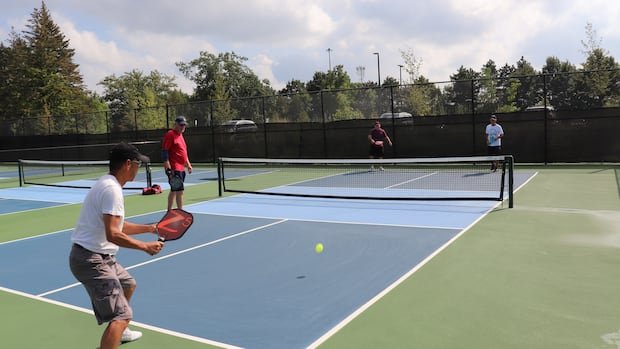
The competition for public space between tennis and pickleball players is a widespread issue across the country. In Scarborough, Ontario, the conversion of two tennis courts into six pickleball courts triggered a petition from a tennis player urging the city to reconsider. A similar conflict escalated to B.C.’s Supreme Court between pickleball and tennis players on Mayne Island. According to Matti Siemiatycki, a University of Toronto professor, the scarcity of public recreational facilities for all sports is a broader problem affecting various communities.
Experts emphasize the need to address the shortage of recreational spaces rather than leaving sports communities to battle for access or relying solely on for-profit entities. Peter Donnelly, a former University of Toronto sports policy studies director, suggests that housing developers should be mandated to include more recreational facilities in their projects, similar to post-World War II public housing policies that integrated parks and community spaces.
The shift in planning legislation has reduced the power of municipalities to charge developers for amenities like recreational spaces due to concerns about delays in housing construction and increased home prices. As participation in racket sports like pickleball and tennis surges, the demand for outdoor sports facilities grows. Private pickleball businesses are emerging to meet this demand, with potential for partnerships between city recreation departments and these businesses to enhance access and affordability.
Municipalities rely on property taxes to fund local facilities, but increasing taxes can be contentious. Innovative funding models like the use of lottery money for community infrastructure have been explored but no ideal solution has been found. Despite challenges like housing affordability, prioritizing public spaces is crucial, as they play a significant role in shaping community identity. It is essential for cities to prioritize recreation spaces to foster active and healthy communities.