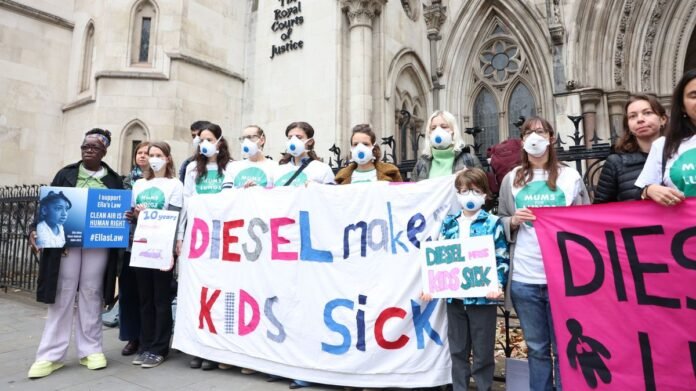
Some major car manufacturers are facing allegations of prioritizing sales over environmental concerns in the ongoing “dieselgate” scandal. According to claims presented in the High Court, these companies allegedly installed devices in their vehicles that could detect emissions tests and adjust emissions levels to meet regulations. However, outside of testing conditions, the vehicles purportedly emitted significantly higher levels of harmful pollutants.
The trial, which is anticipated to span three months and is considered the largest legal action of its kind in English history, began with these accusations. Lawyers representing 1.6 million claimants assert that the manufacturers manipulated diesel emissions tests. The affected vehicles were produced by Mercedes-Benz, Ford, Nissan, Renault, Peugeot, and Citroen, all owned by Stellantis. The companies deny the allegations, stating they have not engaged in deceptive practices like those exposed in the 2015 Volkswagen scandal.
The legal battle will focus on a selection of diesel vehicles from the five manufacturers, with the court’s ruling extending to numerous similar claims against other automakers. The case has garnered attention from individuals directly impacted by air pollution, such as Rosamund Adoo-Kissi-Debrah, whose daughter tragically passed away from an asthma attack linked to pollution exposure. Advocates hope the trial will bring accountability for the environmental and health consequences of diesel emissions.
One car owner, Adam Kamenetzky, shared his disappointment after discovering discrepancies in the emissions data of his purportedly eco-friendly Mercedes SUV. The trial’s opening remarks by Thomas De La Mare KC criticized the industry for prioritizing consumer convenience over emission regulations, leading to the alleged use of “defeat devices” to bypass pollution laws.
The trial is centered around harmful nitrogen oxides emissions controlled by the vehicles’ emissions control systems. A report highlighted the severe health impacts of excess emissions on the population. Legal representatives for the manufacturers, including Renault and Ford, disputed the claims, arguing against the presence of prohibited defeat devices in the vehicles.
The trial, presided over by Lady Justice Cockerill, is scheduled to conclude in December, with final legal arguments slated for March 2026. If proven, the allegations could signify a significant breach of corporate trust, according to Martyn Day, one of the claimants’ lawyers. This legal battle echoes previous court decisions on defeat devices, as seen with Volkswagen’s settlement in 2022 without admitting liability for similar claims.