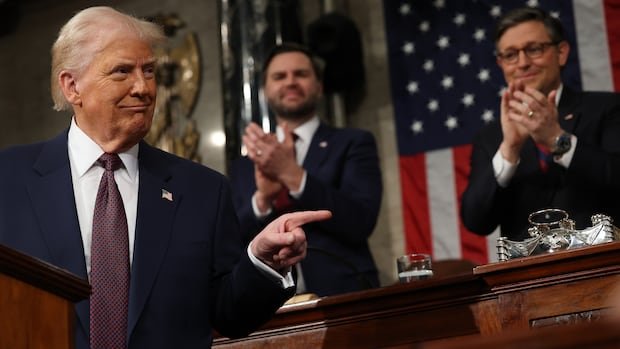
Republicans are gearing up for the upcoming U.S. midterm elections in November, facing increasing pressure to defend their House majority amidst Democrats making strides in key races. The outcome of these elections holds significance beyond just the balance of power in Congress. If Democrats secure control of both the House and Senate, they would gain leverage to scrutinize the Trump administration, challenge its policies, and influence the legislative agenda.
However, a shift in Congress does not automatically translate to a limitation on the president’s authority to act. Journalists Katie Simpson, Willy Lowry, and Paul Hunter delve into the potential implications of a party turnover in Congress and the Senate on Trump’s authority, as well as its impact on Canada-U.S. trade relations.
In response to a listener question about the significance of Democratic control of Congress given Trump’s reliance on executive orders for policy decisions, the discussion highlights the traditional legislative process of passing substantial bills through Congress to enact policy changes. While President Trump has faced challenges in Congress due to the divided control, he has demonstrated the ability to wield power effectively through executive orders even without full cooperation.
Trump’s use of executive orders to address issues such as national security, tariffs, and immigration policies underscores his capacity to advance his agenda independently of Congress. The discussion also speculates on potential hurdles, investigations, and impeachment proceedings that Democrats may pursue in the future. Despite possible optics and challenges, it is debated whether these actions would significantly impede Trump’s ability to pursue his agenda outside of the legislative process.
The conversation emphasizes the limited impact that a power shift to the Democrats in Congress may have on Trump’s decision-making, as he has indicated intentions to continue utilizing veto power and executive orders to push forward his policies. Trump’s readiness to stand firm on his agenda through various means suggests a resilience to external pressures, even amidst potential changes in congressional dynamics.
Overall, the dialogue underscores the intricate dynamics between the executive and legislative branches of government and sheds light on the complexities of governing in a divided political landscape.