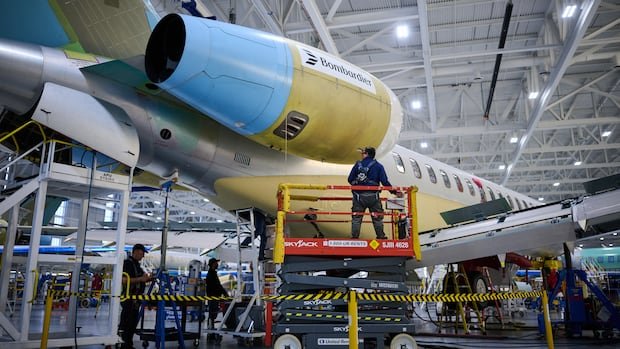
U.S. President Donald Trump declared on Monday that Bombardier, a Montreal-based aircraft manufacturer, will face a ban on sales in the United States unless it begins production within the country.
In a post on Truth Social, Trump stated, “NO MORE SELLING BOMBARDIER IN THE UNITED STATES! Their products do not meet the required standards.” He emphasized the need for Bombardier to establish manufacturing operations in the U.S. if they wish to access the American market and cease treating the country merely as a financial resource.
This announcement by Trump, occurring amidst escalating trade tensions between Washington and Ottawa, marks the latest move in his effort to encourage both foreign and domestic companies to increase their manufacturing presence in the United States. This strategy has significantly influenced economic policies during his second term, particularly evident in the implementation of global tariffs that have sparked objections from various U.S. trading partners.
In response to Trump’s statements, Quebec Premier Christine Fréchette conveyed her support for Bombardier, describing the company as a symbol of Quebec’s economic strength and a vital contributor to the aerospace industry. She underscored the significance of Bombardier’s workforce in showcasing Quebec’s expertise globally and expressed solidarity with Eric Martel, Bombardier’s CEO.
Despite Trump’s assertions, Bombardier already maintains a significant presence in the U.S., with operations that generate thousands of American jobs. The company reiterated its commitment to investing in its U.S. workforce, customers, and communities. Aerospace analyst Richard Aboulafia expressed skepticism about the feasibility of canceling Bombardier orders, citing the substantial usage of U.S.-made engines in Bombardier jets.
The aerospace sector, including companies like Bombardier and Gulfstream Aerospace, remains interconnected on a global scale. Bombardier, with a workforce of 3,500 employees and 2,800 suppliers in the U.S., continues to expand its operations in the country. Additionally, the company’s defense division, based in Kansas, contributes to various special mission aircraft preparations.
Looking ahead, industry experts anticipate that Bombardier might be just the first in a series of targets amidst the ongoing trade dispute. John Gradek, an aviation management lecturer, highlighted the potential repercussions of Trump’s actions on U.S. citizens and the company’s American employees. He suggested that other Canadian companies could also face similar challenges as the trade conflict unfolds, underscoring the need for strategic responses from Canada.
Overall, Trump’s directive regarding Bombardier underscores the complexities of international trade relations and the impact of political decisions on multinational corporations operating across borders.