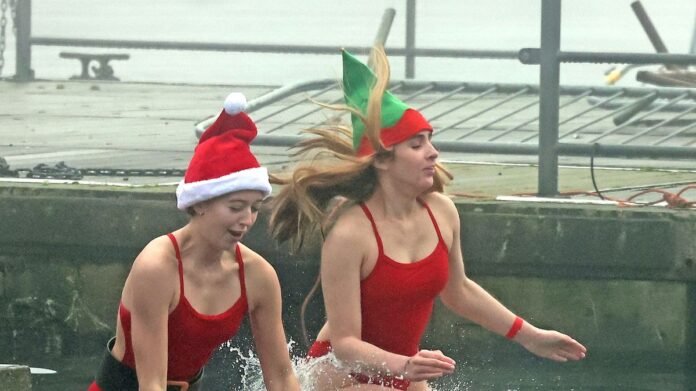
As many people enjoy a post-Christmas break, thousands are gearing up for the annual Boxing Day tradition of swimming in cold waters. Across various water bodies in the country, the concerning state of water quality has been a recurring issue that the government is actively addressing. Recent data from the Environment Agency revealed a positive trend, with 93% of bathing waters meeting the required standards for swimming, marking an improvement from the previous year.
Nottingham locals who frequent a bathing water site shared their year-round swimming habits, even braving icy conditions in winter. To adapt to changing swimming patterns, reforms have been initiated to modernize bathing water monitoring regulations for increased flexibility and responsiveness. The enactment of the Water (Special Measures) Act earlier this year ushered in stringent measures, including holding water executives accountable for concealing illegal sewage discharges and restricting excessive bonuses.
Efforts are underway to introduce automatic penalties for water companies to ensure swift consequences for any violations. The Environment Agency’s budget for water regulation has been elevated to £189 million for 2025/26, facilitating a substantial increase in inspections and investigations into water companies. Recent enhancements in compensation rates and provisions for boil notices aim to safeguard customers and businesses, particularly in scenarios like the disruptive incident in Tunbridge Wells.
With a vision to restore public confidence in water bodies for recreational activities, the government has allocated £104 billion for critical infrastructure upgrades in the next five years. The forthcoming Water White Paper, scheduled for release in the New Year, will outline a roadmap for comprehensive reform, including the establishment of a unified water regulator. While progress is evident, more work lies ahead to ensure sustainable improvements in water quality and safety standards.