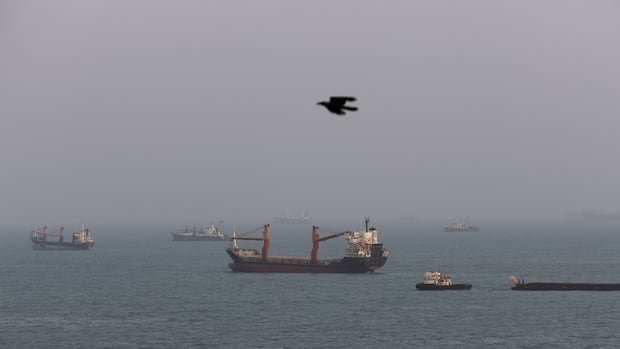
U.S. President Donald Trump dismissed any ongoing discussions with Iran and affirmed that the Strait of Hormuz was operational, contrary to Iran’s claims of closure. The escalating tensions over the unresolved conflict led to a rise in oil prices and a dip in stock markets, with concerns over long-term economic implications.
Following the expiration of a temporary ceasefire agreement, Iran signaled a shift towards a more aggressive military stance amid stalled diplomacy. Trump clarified on Truth Social that there were no current or planned talks with Iran, emphasizing the continuation of the naval blockade and the functioning of the Strait of Hormuz without any water mines.
Despite optimism expressed by Jared Kushner earlier, stating active negotiations with Iran, the situation remains deadlocked since the conflict’s inception six months ago. The standoff persists with Iran threatening shipping in the strait, while the U.S. warns of potential renewed attacks if diplomatic efforts fail to reach a lasting resolution.
One of the primary U.S. objectives is to prevent Iran from obtaining nuclear weapons. However, experts highlight the challenge of achieving this goal without addressing the enriched uranium believed to be stored at previously targeted Iranian sites.
While Trump claimed progress in the Gulf situation, reports surfaced of attempted disruptions in shipping activities. The United Arab Emirates reported the launch of two ballistic missiles from Iran, targeting maritime traffic, which further escalated tensions in the region.
The UAE suspended all trade activities with Iran, citing regional instability. Direct cargo shipping between the two countries had only recently resumed in late June after a suspension following the conflict’s outbreak in early March.
Reports emerged of a vessel being struck by an unknown projectile while transiting the Strait of Hormuz, resulting in engine room damage and casualties among the crew. The Omani Coast Guard provided assistance to the affected ship, with no immediate response from Tehran.
Iran’s top negotiator, Mohammad Baqer Qalibaf, affirmed that the strait would remain closed until the U.S. met the conditions outlined in the interim agreement signed in June. The agreement aimed to establish a broader deal on Iran’s nuclear program and U.S. sanctions within a 60-day timeframe, which lapsed without an extension.
As Iran reiterates readiness for dialogue but insists on its stance, concerns persist over the ongoing conflict’s toll on lives and the economy. The prolonged war has led to significant casualties and economic repercussions, with oil prices surging and global markets remaining volatile.
The U.S. administration signaled potential further economic sanctions on Iran to exert pressure on the regime. The uncertainty looms as both sides navigate the diplomatic impasse and the broader implications of the conflict on regional stability and international relations.