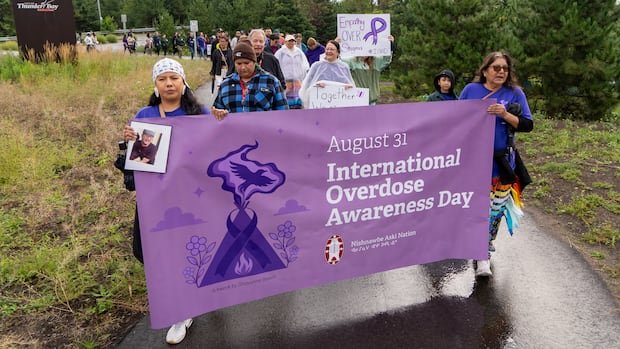
Krista Vescio, a resident of Thunder Bay, Ontario, has been on a journey of recovery from substance abuse for almost 16 years. Her decision to break free from addiction was deeply influenced by the tragic loss of her sister to a drug overdose in 2007, leaving behind five children. Vescio described her sister’s passing as both the most devastating day of her life and a turning point that prompted her to seek sobriety. She reflected on her progress, stating, “Here we are, 16 years in September, and going strong.”
Participating in a walk organized by Nishnawbe Aski Nation (NAN) on Wednesday, Vescio joined numerous others to raise awareness about the pressing issue of drug-related crises. Thunder Bay district has garnered attention for having an opioid-related fatality rate exceeding five times the provincial average in 2025, as reported by the Office of the Chief Coroner.
The walk, starting from Marina Park and culminating at the Intercity Shopping Centre, covered a distance of approximately five kilometers. The event was part of an overdose awareness initiative hosted by the City of Thunder Bay Drug Strategy and Thunder Bay District Health Unit (TBDHU).
Expressing the need for increased support services, Vescio emphasized the importance of readily available resources for individuals seeking assistance, stating, “It’s gotta start somewhere, right?” Anna Betty Achneepineskum, a deputy grand chief with NAN and a member of Marten Falls First Nation, advocated for enhanced aid in the city, including sustainable funding for agencies working directly with affected individuals.
Achneepineskum highlighted the necessity for improved detox facilities, transitional care, aftercare programs, and housing options for those battling drug dependencies. With a municipal election looming, she urged the forthcoming council to prioritize proactive solutions for the community.
In the Thunder Bay district, there were 61 confirmed opioid-related deaths in the previous year, according to the Office of the Chief Coroner. Kandace Belanger, a manager at TBDHU, underscored the significance of recognizing the human toll behind such statistics, emphasizing that each number represents a cherished individual with connections to their community.
Belanger encouraged open discussions about addiction and available support services, particularly noting the accessibility of free naloxone kits at pharmacies and through health units. She stressed the importance of providing spaces for grieving individuals affected by overdose-related losses to find solace and solidarity.
Elaine Keesick and Marilyn Keno, both from North Spirit Lake First Nation, participated in the awareness walk to honor loved ones lost to addiction and show solidarity with those currently struggling. Keesick extended a message of support, reassuring individuals battling addiction that they are not alone.
Vescio echoed sentiments of hope and resilience, urging individuals to persevere, emphasizing that there is always hope and support available. She emphasized the value of familial love and self-worth in overcoming challenges.