A researcher is examining the impact of an invasive bug and insecticides on species in hemlock forests. The hemlock woolly adelgid (HWA) has been causing damage in southwestern Nova Scotia for almost ten years. To combat its spread, insecticides like imidacloprid and dinotefuran are being used by various entities.
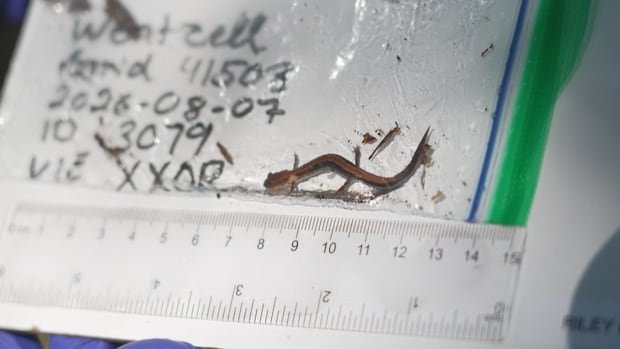
Mathilde Christjansen, a master’s student at Mount Allison University, highlighted the lack of knowledge on the effects of woolly adelgid and insecticides on other species. The study focuses on the eastern red-backed salamander as a bioindicator species to assess the overall ecosystem health.
Scientists placed coverboards in forests last year to provide habitat for salamanders and conducted surveys to monitor their populations. They also performed behavioral tests on the salamanders to gauge their responses to different stimuli. The research aims to determine how forest health is influenced by factors like insecticides, dying hemlocks, and changes in moisture levels.
Collaborating with several institutions, including Mount Allison University and the Canadian Forest Service, the project forms part of a broader investigation into forest health in Eastern Canada. Christjansen plans to continue the study into the following year, analyzing the collected data and videos to draw conclusions.