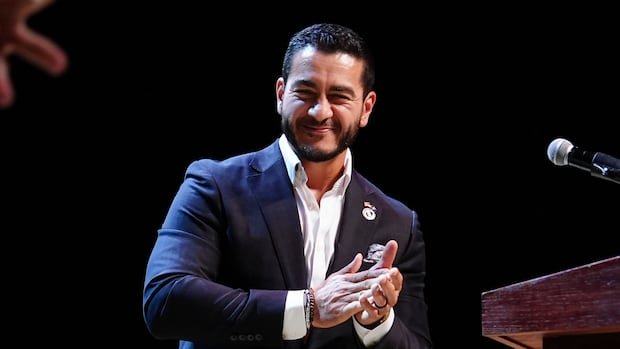
Abdul El-Sayed, a former public health official who tapped into Democratic dissatisfaction with the party’s status quo, narrowly won the U.S. Senate primary in Michigan over Rep. Haley Stevens. This sets the stage for a critical assessment of progressive strength in a pivotal battleground state.
El-Sayed is now set to go head-to-head with Republican Mike Rogers, a former congressman, in the upcoming November midterm elections. The outcome of this race will play a significant role in determining Senate control. El-Sayed’s immediate challenge lies in uniting Democratic factions following a contentious primary that showcased differing visions for a party striving to regain influence.
Despite a close victory margin over Stevens, who eventually endorsed El-Sayed post-defeat, the insurgent candidate garnered support from those seeking a more assertive stance against entrenched corporate powers and President Donald Trump. Describing his win as a seismic political event, El-Sayed emphasized the need for change.
Michigan Democratic Party Chair Curtis Hertel emphasized the importance of unity moving forward. He stressed the necessity of collective action to reclaim the country. Echoing this sentiment, Hertel highlighted El-Sayed’s track record as a staunch advocate for the people.
Meanwhile, Trump took aim at El-Sayed, accusing him of harboring negative sentiments toward Israel and Jewish people. In response, El-Sayed clarified his stance, denouncing antisemitism and emphasizing the distinction between criticizing Israel’s policies and antisemitism.
The Associated Press officially declared El-Sayed the victor following updates from Wayne and Oakland counties. The razor-thin margin of victory necessitated the counting of nearly all ballots cast statewide before a definitive result was reached.
El-Sayed’s win signals a notable shift within the Democratic Party. Despite a previous loss in the gubernatorial primary, he campaigned on progressive platforms such as “Medicare for All,” reevaluating military aid to Israel, and reforming campaign finance. Support from influential progressives like Sen. Bernie Sanders and Rep. Alexandria Ocasio-Cortez underscored the grassroots nature of El-Sayed’s campaign.
In contrast, Stevens, a moderate candidate with significant establishment backing, emphasized her experience and track record in challenging races. Her focus on manufacturing and the economy positioned her as a viable contender against Rogers.
The upcoming Senate race in November will influence the balance of power in the Senate during the final years of Trump’s presidency. The contrasting strategies of El-Sayed and Stevens have stirred debates, with moderates expressing concerns about El-Sayed’s electability against a Republican opponent.
As the political landscape evolves, the distinctions between the candidates have become increasingly apparent to voters. El-Sayed’s anti-establishment narrative resonated with some, while Stevens’ emphasis on collaboration and experience garnered support from others.
External groups injected substantial funds into the race, heightening its significance as a test of outside spending influence. Notably, pro-Stevens groups invested over $50 million, with a significant portion attributed to AIPAC. The divergence in views on U.S. policy towards Israel further underscored the ideological differences between the candidates.