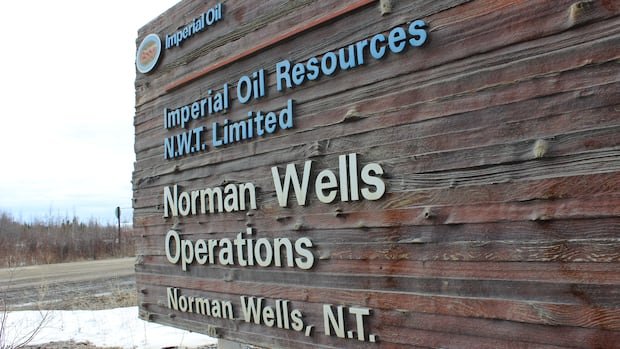
The community of Norman Wells, N.W.T., is undergoing significant changes following the official cessation of production by Imperial Oil last Friday. Mayor Frank Pope described this event as a small yet crucial moment, prompting the 700 residents to contemplate the future. Imperial Oil has been a longstanding presence in Norman Wells for over a century. Earlier this year, the company announced the closure of its operations due to declining production levels at the site.
This shutdown has necessitated a shift in the town’s operations, including the adoption of a new diesel power source from the Northwest Territories Power Corporation to replace the gas generation previously provided by Imperial Oil. Mayor Pope expressed concerns about the reliability of the new diesel system, particularly highlighting the limited number of workers available locally to address any potential issues in case of a major outage. He emphasized the need for permanent trained staff to be stationed in the community promptly.
Apart from operational adjustments, the departure of Imperial Oil has prompted a reassessment of Norman Wells’ budget. The company’s tax contributions, which accounted for 70% of the town’s budget, are now in question. Mayor Pope disclosed plans to negotiate with Imperial Oil on tax rates during the forthcoming remediation project spanning approximately 20 years. Job security is also a key focus for Pope, as he hopes to maximize local employment opportunities during the remediation efforts.
Doug Matthews, an energy analyst and advisor to the Sahtu Secretariat Incorporated (SSI), echoed the sentiment of prioritizing local employment and training initiatives. Collaborative discussions involving the government, Imperial Oil, and the Town of Norman Wells are ongoing to devise strategies to equip community members with the necessary skills for the closure and restoration project. Matthews emphasized the importance of utilizing local skilled workers and providing them with additional training for the remediation process, citing a local company in the Sahtu region already involved in interim restoration work with Imperial Oil.
Matthews highlighted the potential for communities to revitalize themselves through innovative approaches, transitioning from oil production to environmental cleanup. He emphasized the significance of engaging local workers in the restoration process, viewing it as an opportunity for communities to reclaim and restore their land sustainably.