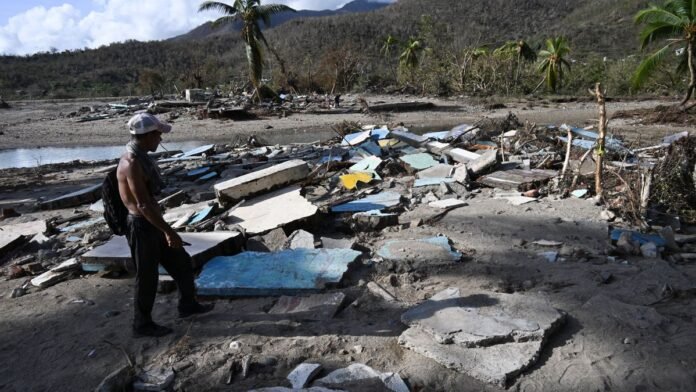
The death toll from Hurricane Mellissa has reached 80 as the powerful category five storm wreaked havoc across the Caribbean region. Mellissa struck Jamaica on October 28, unleashing winds of 185mph that caused widespread destruction, including damage to critical infrastructure, destruction of roofs, and severe flooding in various areas. The impact left 72% of Jamaicans without electricity and hindered access to many parts of the country due to blocked roads.
The devastating effects of the hurricane resulted in 32 fatalities in Jamaica, 43 in Haiti, four in the Dominican Republic, and one in Cuba, with authorities fearing the death toll may increase as recovery operations proceed. The storm particularly hit Jamaica’s agricultural areas, compounding the challenges faced after the prior year’s Hurricane Beryl. Jamaican officials anticipate a rise in food prices and disruptions to key sectors like tourism in the aftermath of Mellissa.
Estimates from US forecaster AccuWeather suggest that Mellissa caused damages totaling between $48 billion and $52 billion across the Caribbean, with insured losses in Jamaica projected to range from $2.2 billion to $4.2 billion according to data analytics firm Verisk. Local Jamaican Councillor Kenord Grant emphasized the ongoing difficulties the country is encountering in its recovery efforts.
Expressing sympathy for the severely impacted St Elizabeth region, Councillor Grant highlighted the importance of restoring agricultural activities promptly to mitigate economic repercussions. He also warned about the broader economic impact on various industries, including tourism, across the island. Grant mentioned the collaborative efforts of both political parties in Jamaica to rebuild and restore the nation post-Mellissa.
For those willing to support Jamaica’s recovery, the Jamaican government has set up a disaster relief website, supportjamaica.gov.jm, where donations can be made directly to aid relief operations.