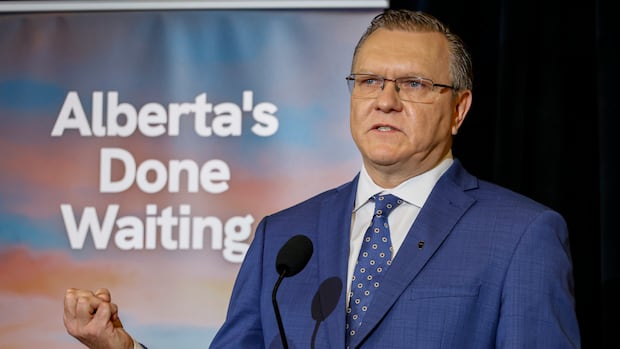
An organization advocating for independence has unveiled a “transition plan,” outlining what it envisions as a pathway if Albertans decide in the future to pursue sovereignty.
On Thursday, the Alberta Transition Council published a 214-page document detailing various proposals related to how life in Alberta could be structured following a potential “yes” vote for independence.
The report also addresses numerous regulations and institutions that would necessitate a transition to Alberta’s authority through discussions, including negotiations with the federal government.
These proposals cover a broad spectrum, ranging from the continuity of social services to air traffic management, the establishment of a new constitution, and the dynamics with First Nations.
Keith Wilson, a lawyer and head of the Alberta Transition Council, who is also involved with the independence movement Let Alberta Decide, emphasizes that the goal is to illustrate how Alberta could exit Canada with minimal disruptions.
“We must remember that we’re not starting from zero. The airport personnel will remain; we’re not demolishing the airport. We’re simply changing who handles the payroll,” Wilson remarked.
However, a critic has contended that any planning for transition is premature and that the proposals are “unrealistic” regarding the complexities likely involved in negotiations.
“Many of these matters could take years to resolve and may never reach a conclusion,” stated Errol Mendes, a constitutional and international law professor at the University of Ottawa.
Not all in Alberta’s control, report states
Albertans will vote on October 19 to decide whether to remain part of Canada or to initiate a second, binding referendum on separation.
Current polling indicates that a minority of Albertans support the notion of secession.
The core principle outlined by the group is to avoid viewing the transition as the inception of a new country “from the ground up.”
“Alberta’s independence wouldn’t sever its ties with Canada entirely,” the report states. “It would modify the legal and governmental framework that governs that relationship.”
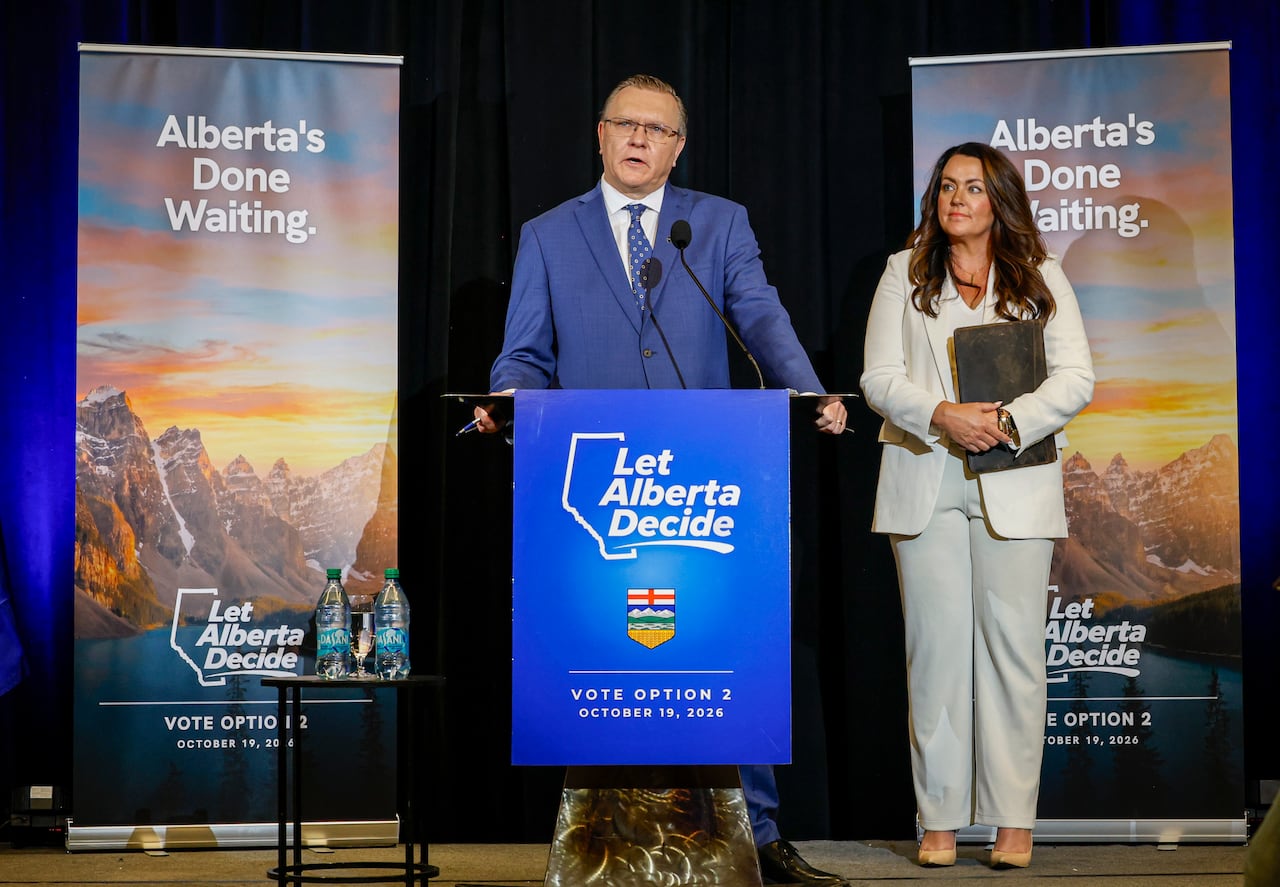
Let Alberta Decide co-leaders Keith Wilson, left, and Tanya Clemens are pictured at the launch of Alberta independence organization Let Alberta Decide in Calgary on June 19. (Jeff McIntosh/The Canadian Press)
Concurrently, the report acknowledges that not every aspect of this transition is under Alberta’s jurisdiction.
Negotiations would be required with Canada, First Nations, and other entities concerning areas such as debt, mobility, energy infrastructure, pensions, borders, and assets.
The report points out that outcomes cannot be predicted or assured.
It claims that 45 Albertans from various sectors, including banking, law, international trade, First Nations, and law enforcement participated in the development and evaluation of this report.
However, the identities of these contributors have not been disclosed.
Wilson stated that anonymity was necessary to protect contributors from potential “cancel culture” or harassment.
“The report will stand on its own. People in Canada and around the world are becoming skeptical of the ‘experts say’ narrative,” Wilson told CBC News. “Individuals can assess it based on their own experiences and ask themselves, ‘Do the fundamental facts seem correct? Does this assessment resonate?’”
This document is one of several recent publications exploring the various implications of Alberta’s potential separation from Canada on everyday life.
-
Alberta separation too costly with too many uncertainties, warns Calgary think-tank
-
A president, open-carry gun laws, elected judges: Group floats vision for an independent Alberta
From currency to mortgages to military
The introductory section of the report poses several pivotal questions.
“How will laws be maintained? How will the judiciary function? How will salaries and pensions be disbursed? How will money flow through financial institutions? How will air travel continue?”
The group provides several suggestions. For currency, it proposes using the Canadian dollar on the first day of independence, as this would minimize disruption to contracts, pricing, and consumer activities.
“Alternative options, such as adopting the U.S. dollar, dual-currency systems, or establishing a future Alberta currency, are considered longer-term or contingency strategies,” the report indicates.
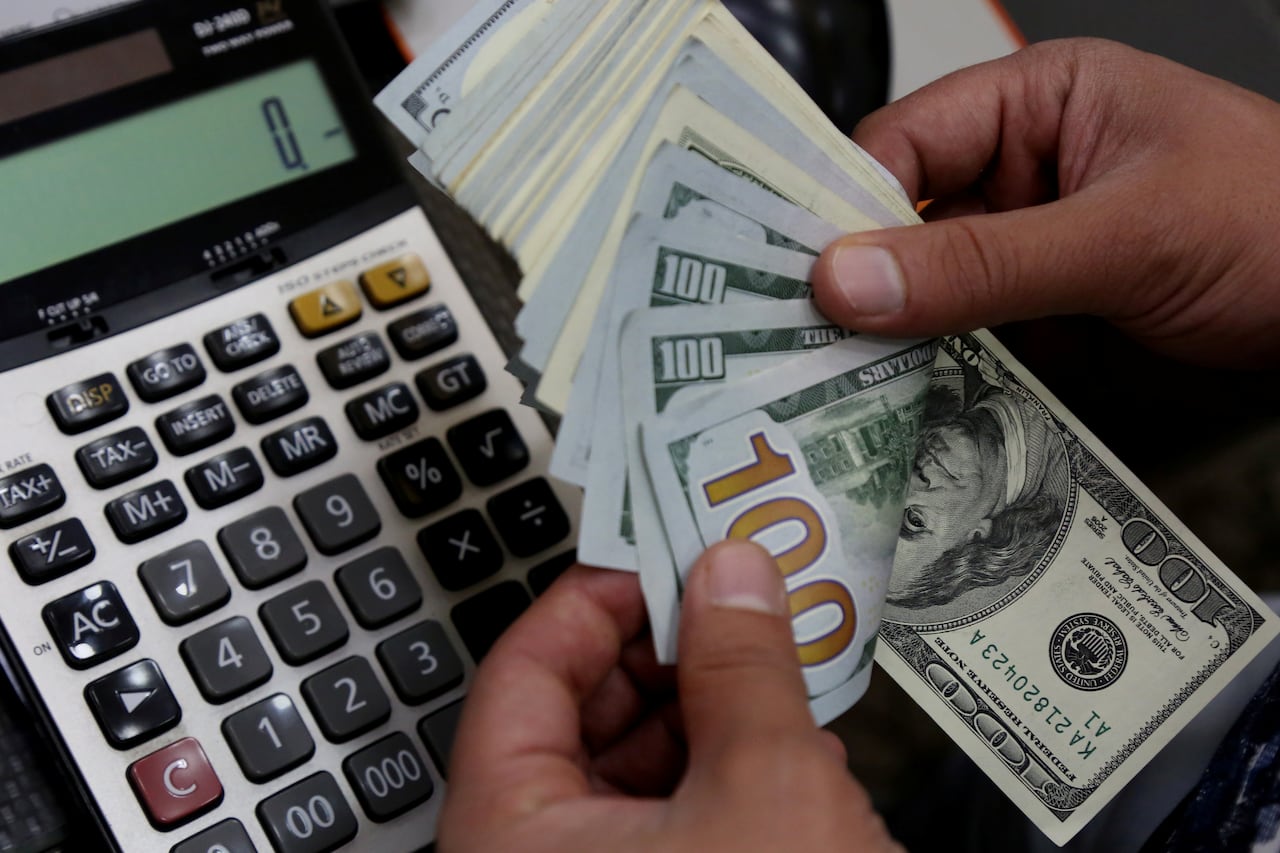
U.S. banknotes are shown in a file photo. The Alberta Transition Council suggests using the Canadian dollar as a starting point, but leaves the door open to transition to the U.S. dollar or a future Alberta currency. (Sertac Kayar/Reuters)
In many instances, a complete resolution is not yet provided. Regarding pensions, the group intends to maintain current pension payments, postponing discussions about future pension plans and asset transfers.
Concerns regarding mortgages in the event of a separation vote have been prominent leading up to the referendum. Earlier this year, analysts informed CBC News that many uncertainties surround what is likely to be a complex process.
The plan suggests that the Canada Mortgage and Housing Corporation could be invited to continue its services in an independent Alberta.
“If they’re not interested, Alberta would establish, before independence, the Alberta housing mortgage corporation,” Wilson stated. “A transition would occur where this Alberta entity would agree to take over the mortgage guarantees, ensuring that banks remain stable.”

An aerial photo of Lewis Estates in Edmonton. (David Bajer/CBC)
Earlier this week, in a different report, the Calgary-based think tank Canada West Foundation estimated that Alberta’s per capita debt could soar to between $80,000 and $95,000 post-separation, compared to the current $27,000 per person in 2024, due to the increased debt burden Alberta could incur.
While not providing a definitive figure on federal debt, the Alberta Transition Council suggests that Canada should not require Alberta to assume a debt share solely based on population.
“This method would overlook Albertans’ historical fiscal contributions, which should be factored into any equitable calculation model,” the report states.
Likewise, the report does not include a comprehensive financial analysis concerning the implications of independence, promising a subsequent report addressing these issues in the near future.
The document also recognizes the constitutionally-protected rights of First Nations and their status as treaty partners.
“Reserve land would not automatically change due to Alberta’s independence,” the report notes.
If the independence vote is successful, the report proposes four “relationship pathways” for First Nations, including “Option A,” which would enable a First Nation to “maintain its current relationship with Canada as much as possible.”
The report also recommends expanding the Alberta Sheriffs into a full provincial police force to replace the RCMP and proposes a preliminary defense force of 2,100 members, comprising 300 full-time permanent personnel and an additional 1,800-member “territorial force.”
‘I don’t doubt that it’s rosy’
In a report released earlier this week, the Canada West Foundation highlighted that negotiations for Alberta’s secession from Canada would be intricate, with no guaranteed outcomes.
Establishing an independent Alberta could incur costs exceeding $200 billion, with ongoing expenses estimated at over $50 billion annually, according to former Treasury Board senior manager Lennie Kaplan.
Gary Mar, the president of Canada West Foundation, mentioned that he has not yet reviewed the entire Alberta Transition Council’s report. However, he believes that both sides, those wanting to “leave” and those preferring to “stay,” possess excessive certainty regarding their positions.
“We’ve examined the complexities inherent in both scenarios, remaining and departing, and drawn our conclusions,” Mar stated. “While I find Mr. Wilson’s work to be optimistic, I recognize that this is the perspective he is advocating.”
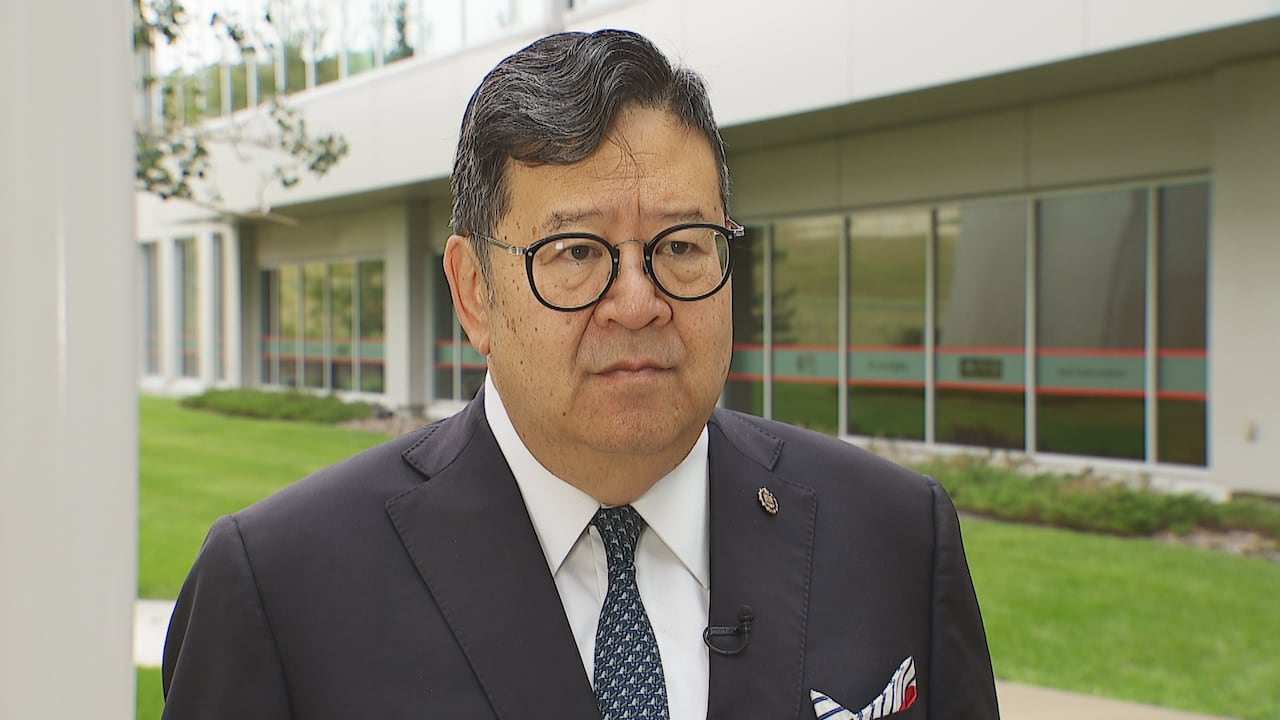
Canada West Foundation President Gary Mar said people on both the ‘stay’ and ‘leave’ sides of the debate promote a future of fantastic opportunity with too much certainty. (CBC)
Thomas Lukaszuk, head of the Forever Canadian movement and a former deputy premier of Alberta, described the plan as “absurd.”
“He believes he can separate and then the next day ask, ‘What’s for dinner, honey?’” Lukaszuk commented. “Well, that’s not how it works. This is a separation.”
Wilson asserted that his group’s report is optimistic “in the sense that we expect both the federal government and the provinces, along with First Nations, to engage in good-faith negotiations.”
“We understand the various services and functions the federal government provides. We can effectively plan for their transition, just as any business does when one company acquires another. The customer experience remains uninterrupted,” he stated.
In the upcoming weeks, Albertans can anticipate more figures and forecasts regarding the province’s future.
This includes a study conducted by the University of Calgary that examines the potential costs associated with Alberta’s separation from Canada, commissioned by the provincial government.
That report is expected to be released later this month.