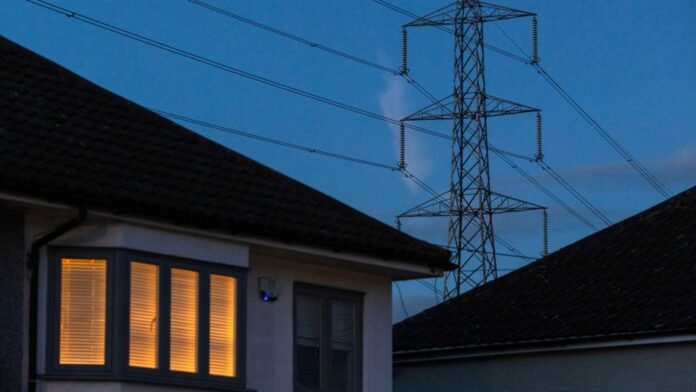
The decision to approve a £28 billion deal for energy companies has drawn criticism for potentially raising customer bills by almost £110 annually. Ofgem, the industry regulator, has granted permission for firms to enhance and invest in their gas and electricity networks over the next five years.
Under the agreement, companies can recover the investment costs from customers, starting with a £40 increase in bills in April and escalating to a projected £108 per year by 2031. However, these figures do not consider the anticipated cost savings from such substantial investments. Ofgem estimates that, factoring in these savings, the actual increase in 2031 may be closer to £30 per customer.
The final deal exceeds Ofgem’s initial proposal by £4 billion, following industry pressure. Ofgem argues that the investment will decrease the UK’s reliance on imported energy and eventually lead to cost savings for households.
Citizens Advice has raised concerns, pointing out that network companies have already benefited from £4 billion in unexpected profits over the past four years. Gillian Cooper, the director of energy at Citizens Advice, stated that energy bills are set to rise by approximately £40 from April 2026, with further increases expected in the future.
Various critics, including Simon Francis from the End Fuel Poverty Coalition, have warned about the risks associated with the substantial investment, urging for increased scrutiny and consumer protection. Greenpeace UK’s Charlie Kronick emphasized the need for energy costs to decrease as the country transitions to a cleaner energy system.
Founder of Ecotricity, Dale Vince, highlighted the importance of breaking the link between wholesale gas prices and electricity costs to lower energy bills. Vince criticized Ofgem’s claim that increased renewable energy on the grid, supported by the bill hikes, would lead to lower costs, emphasizing the need to disconnect from volatile global gas prices.
Despite the criticisms, Andy Prendergast from the GMB union welcomed the overdue investment in gas and electricity infrastructure, emphasizing the importance of moving towards energy independence.
The investment will primarily focus on upgrading gas transmission and distribution networks, with a significant portion allocated to strengthening the nation’s high-voltage electricity network. As a result, network charges on bills, which account for around a fifth of annual energy costs, are expected to rise by £108 by 2031 to cover the investment costs.
Jonathan Brearley, Ofgem’s chief executive, emphasized that the investment will facilitate the transition to new energy sources and support industrial growth, aiming to insulate the country from fluctuating gas prices.
Government officials stressed the necessity of upgrading the energy networks to ensure energy security for the nation. Dhara Vyas, the chief executive of Energy UK, highlighted the importance of increasing infrastructure investment to meet the growing demands of the energy system.
Ofgem has reviewed and adjusted the investment plans proposed by energy companies, making reductions of over £4.5 billion compared to the initial submissions. The approved investment will fund 80 new power projects, enhancing the grid’s capacity to accommodate electricity from renewable sources.
Scottish and Southern Electricity Networks and National Grid have expressed support for the investment, emphasizing its role in reducing reliance on imported energy and strengthening energy security.