
According to a recent report commissioned by Protein Industries Canada, Canada stands to gain billions in GDP and generate numerous job opportunities if a portion of its crop exports is processed domestically in local facilities.
Tyler Groeneveld, CEO of Protein Industries Canada, remarked in an interview with CBC, “We have a wealth of crops grown across the country, indicating that we can achieve better results.”
He added, “We can produce more consumer packaged goods and ingredients for Canadian supermarket shelves while also having the capacity to supply high-protein, nutrient-rich ingredients to a world in need.”
The report indicates that “diverting merely 10 percent of Canada’s raw crop exports to domestic processing could lead to an increase of up to $5.4 billion in GDP” and potentially generate around $1.1 billion in government revenue, alongside approximately 34,000 full-time equivalent jobs.
Protein Industries Canada, an agri-food trade organization based in Regina, engaged Ernst & Young LLP to conduct the study, which was unveiled on September 22 during the Plant Forward trade show in Saskatoon.
-
Canada is an agricultural superpower. Could it feed the whole world?
-
Canadian agri-food industry gets $1B federal funding boost for domestic production projects
The analysis focused on four key areas: human food, animal feed, ingredient processing, and bio-industrial applications.
Potential downstream applications for Canadian crops and agricultural byproducts in bio-industrial sectors include the production of biopolymers and lubricants from oilseeds, resins for 3D printing, biodegradable packaging, and pharmaceuticals.
Additionally, the report explored possible spin-off opportunities in food processing, such as aquaculture feed, military rations, disaster relief supplies, and ingredient manufacturing for processed foods and beverages.
Groeneveld emphasized, “The economic prospects for Canada in ingredient processing are immense. The food and beverage sector represents a $9.8 trillion market projected by 2040.”
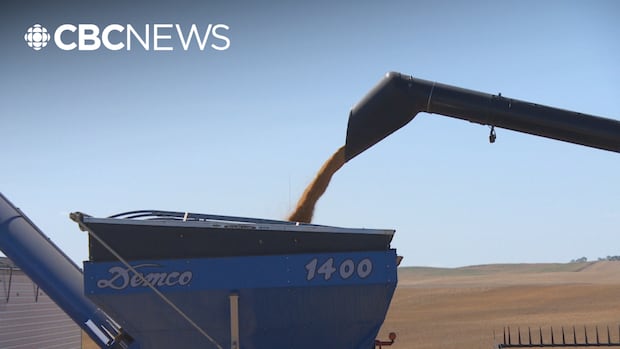
A new report indicates that Canada is missing out on billions by not increasing its domestic crop processing. Protein Industries Canada commissioned the study to advocate for investments in the agri-food sector.
The food sector is the largest manufacturing industry in Canada, employing over 350,000 individuals across nearly 10,000 facilities, according to Michael Graydon, CEO of Food Health and Consumer Products of Canada, a trade group for food manufacturers.
He advocates for greater capital investment in agri-food to maintain more food production domestically.
Graydon mentioned, “We export more than $700 million worth of commodity tomatoes from this country while importing $500 million in canned and processed tomato products.”
He further explained, “The revenue from commodity sales remains unchanged, whether it’s domestic or international. We have lost job opportunities related to transforming those tomatoes into sauces and other products.”
The report identified that growth in the agri-food sector is obstructed by regulatory and supply chain inefficiencies, transportation constraints at railroads and ports, “policy fragmentation” that creates barriers to internal trade, and an impending workforce shortage due to mass retirements anticipated by 2030.
In 2024, the food and agriculture sector was valued at approximately $149.2 billion, accounting for around seven percent of the national GDP, and supporting 2.3 million jobs, the report noted. Wheat, canola, and corn make up about 70 percent of Canada’s yearly crop production.
The report recommends that, as Canada aims to diversify its economy and international trade relationships while reinforcing domestic supply chains to reduce dependency on the U.S., now is the prime opportunity to invest in expanding the industry.
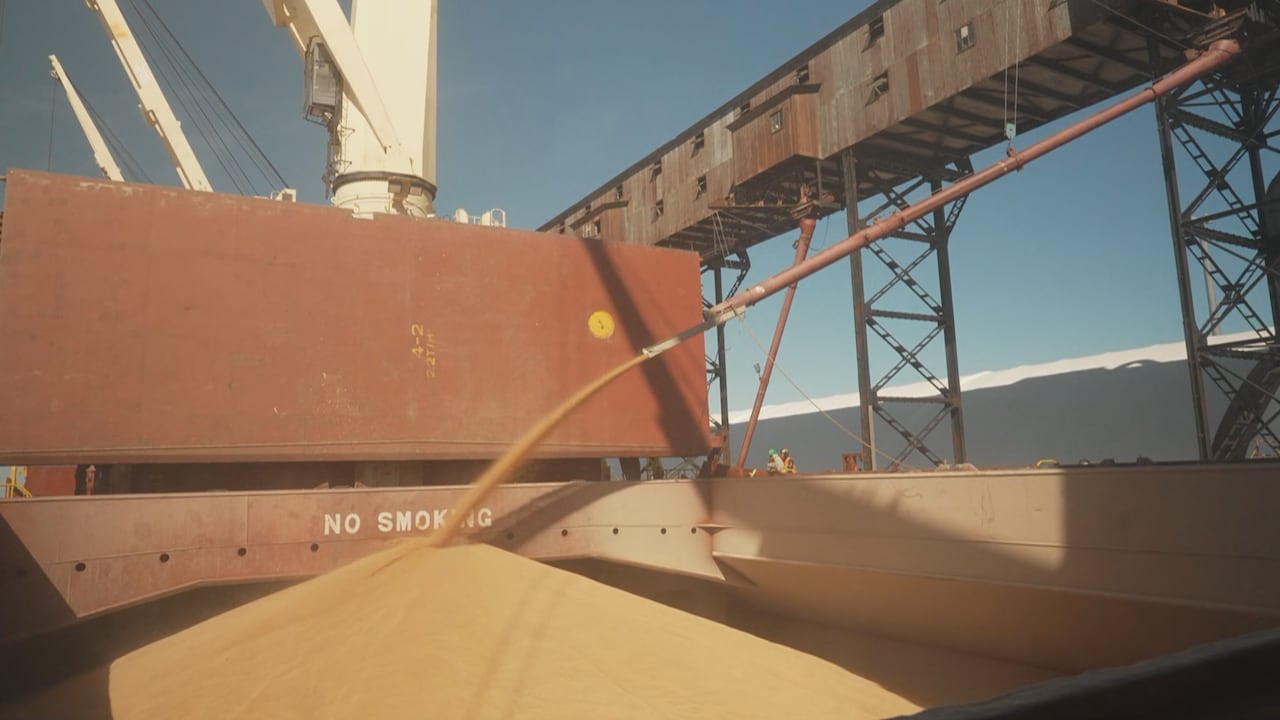
Grain is being loaded onto the Federal Spey, a vessel docked at the Port of Churchill on Monday, August 31. Later that week, the ship would depart for Italy carrying 30 thousand tonnes of Canadian durum wheat. (Ron Boileau/Radio-Canada)
In 2024, Canada exported 88 percent of its food shipments to the U.S., as reported. The U.S. and China are the largest importers of Canadian crops and agricultural goods, accounting for 32 percent and 18 percent, respectively.
Brian Conn, president of Louis Dreyfus Company Canada, concurs with the report’s evaluation of the agri-food sector’s growth potential. The company operates a canola crushing and pea processing facility in Yorkton.
Conn expressed, “We are very optimistic about the prospects, not only in oils and fats from our canola processing business but also regarding future protein demand.”
He noted, “Being situated at the right origin is crucial. Collaborating with farmers in Western Canada, particularly in Saskatchewan and at our Yorkton facility, provides us a significant competitive edge.”
Graydon suggested that Saskatchewan should play a pivotal role in advancing the agri-food sector.
“Given the rich agricultural output, this should be a focal point for increased capital investment in manufacturing,” he stated.
“When you consider food, value-added manufacturing is becoming increasingly sophisticated…. These are high-paying technical roles that can greatly influence the economies of the communities hosting these manufacturing sites.”
The recommendations from the report include establishing a scientific advisory committee for “novel agri-food products,” creating accelerator programs and investment roundtables to stimulate private capital involvement, and developing regional cold-storage and pre-processing hubs to ensure a steady supply of raw materials.
Additionally, the report recommends initiating a pilot project involving two provinces aimed at reaching an agreement on “mutual testing, certification, and documentation standards” to dismantle inter-provincial trade barriers.