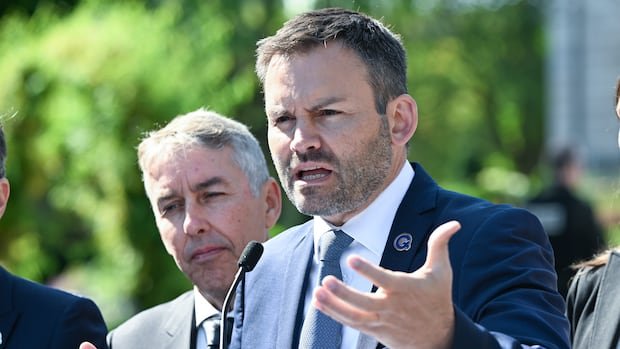
Parti Quebecois Leader Paul St-Pierre Plamondon faced criticism from his political opponents on Friday following his disclosure that the estimated cost of his proposed sovereignty referendum would be at least $130 million.
While three of the five campaign leaders argued that there were more beneficial ways to allocate this funding, the sovereigntist left-wing party Quebec Solidaire stood by the proposed expenditure.
During an interview with The Canadian Press, St-Pierre Plamondon outlined the expenses associated with preparing for and conducting the referendum in either 2029 or 2030 if his party assumes power.
The referendum budget encompasses $20 million for initial studies and consultations during the early years of a Parti Quebecois government mandate. According to the party leader, conducting the referendum in 2029-30 would amount to $110 million.
St-Pierre Plamondon acknowledged that the costs could surpass this figure in the event of unforeseen expenditures.
“We believe in democracy and consulting the public when necessary, regardless of differing opinions,” he added.
The specifics of his party’s referendum plans will be released within the financial framework scheduled to be made public on September 15, coinciding with the first party leaders’ debate ahead of the provincial election set to conclude when Quebec residents cast their votes on October 5.
Various party leaders expressed disapproval of St-Pierre Plamondon’s proposal. Coalition Avenir Quebec leader Christine Frechette pointed out missing details in his plan, particularly the expenses that could arise post-referendum.
She emphasized, “They talk about the cost of organizing a referendum at $130 million. What about the expenses in the first year of an independent Quebec? That aspect remains unaddressed.”
Frechette, who refrained from disclosing her stance on a sovereignty referendum, identified as an “autonomist,” pledging to safeguard Quebec’s interests within Canada.
Quebec Liberal Leader Charles Milliard criticized the proposed expenditure as a misallocation of resources during a separate press briefing.
“With $130 million, we could provide nearly a million hours of home care, construct approximately three elementary schools, and develop 1,300 non-market housing units,” he stated.
Conservative Leader Eric Duhaime promptly condemned St-Pierre Plamondon’s strategy, labeling it as inappropriate to plan such expenses when the cost of living is soaring.
“Unfortunately, the Parti Quebecois is out of touch with reality,” Duhaime remarked.
St-Pierre Plamondon affirmed that his party intends to conduct a referendum on Quebec sovereignty post the departure of US President Donald Trump from office, regardless of whether they secure a majority or minority government.
In response to the backlash, St-Pierre Plamondon defended the referendum budget, noting that general elections in the province typically cost about $110 million.
He contended that Quebec’s independence would yield long-term cost savings by eliminating federal redundancies that drain billions of dollars annually.
Additionally, on the campaign trail, Quebec Solidaire co-spokesperson Ruba Ghazal stressed the necessity of extensive consultations regarding Quebec sovereignty.
Ghazal emphasized the importance of inclusive dialogues with various groups, including First Nations, individuals apprehensive about Quebec’s independence, anglophones, and society as a whole.
She disclosed that her party has earmarked $220 million for an assembly tasked with drafting a new Quebec constitution central to a sovereignty referendum.
If elected premier on October 5, St-Pierre Plamondon revealed plans to appoint a minister responsible for the independence process, replacing the minister of Canadian relations.
While no specifics regarding the size or staffing of the ministry were provided, St-Pierre Plamondon committed to maintaining its current scale.
Amid demands for transparency on the potential referendum costs, St-Pierre Plamondon opted to disclose the financial details, emphasizing the significance of involving the public in shaping their future.
He expressed confidence in the prudent budgeting of his party’s promises, citing it as a cautious fiscal approach.
The financial framework to be presented shortly will outline the budgetary structure for Quebec within the prevailing context, excluding commitments such as establishing a Quebec army post-independence – a measure contingent on a “Yes” victory in the referendum.
“The budgetary framework for Quebec will evolve following independence,” St-Pierre Plamondon concluded.