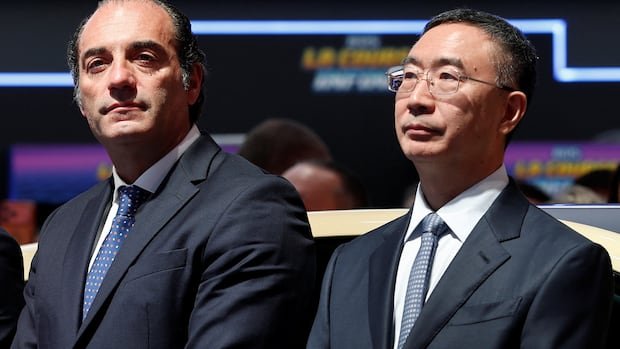
Stellantis and Volkswagen, major players in the European auto industry, showcased their increasing confidence in electric vehicles at this year’s Paris auto show. Drawing inspiration from their Chinese counterparts who are reshaping the domestic market, both companies are adapting strategies to counter the rising competition from Chinese rivals in Europe. Stellantis, encompassing brands like Citroen, Peugeot, Opel, and Fiat, is leveraging partnerships with Leapmotor and Dongfeng to delve into the Chinese tech landscape and enhance their own capabilities.
Stellantis CEO Antonio Filosa emphasized the importance of collaboration with Chinese partners to understand and adopt competitive technologies. The company’s recent tie-ups with Leapmotor and Dongfeng represent a strategic shift aimed at localizing production to meet European regulations. The shift towards electric vehicles in Europe has gained momentum, driven by factors such as increased fuel prices and the availability of more affordable models from Stellantis and Volkswagen.
Volkswagen, under the leadership of CEO Oliver Blume, has also been influenced by the Chinese market, which he describes as a crucial learning ground for the industry. While Volkswagen’s partnership with Xpeng primarily targets the Chinese market, the potential for collaboration in Europe remains uncertain. Blume’s suggestion of utilizing excess plant capacity for Chinese partners in Europe could pose risks by aiding rivals in localizing production and complying with European regulations.
In the evolving automotive landscape, European automakers must acknowledge China’s pivotal role as a source of learning and innovation. While Volkswagen focuses on partnerships in China, Stellantis’ successful alliance with Leapmotor is making strides in Europe. Analysts suggest that European automakers need to embrace China’s evolving role as a teacher, marking a shift from the traditional learning dynamic between China and Germany.


