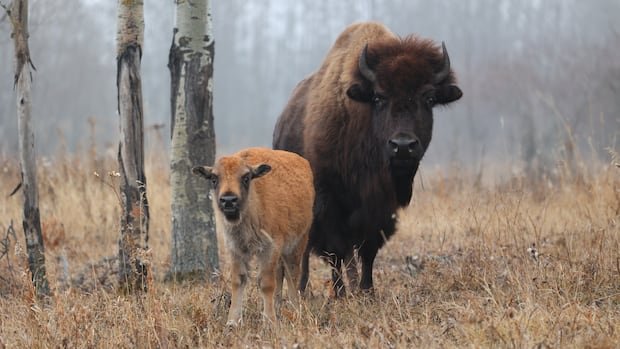
Once abundant across North America, bison faced near extinction due to hunting, leading to significant changes in their genetic makeup. Recent DNA research has unveiled insights into the evolution of bison herds over the past 20,000 years.
The study, detailed in the journal Science, involved sequencing 160 bison genomes and was a collaborative effort by nearly 40 scientists, spearheaded by paleogeneticist Jonas Oppenheimer and the Paleogenomics Lab at the University of California, Santa Cruz.
By analyzing the complex genetic history of bison, researchers aim to enhance conservation strategies and ensure the long-term survival of these iconic animals.
Fragmentation of bison populations, now managed in isolated herds, poses challenges to their resilience, as highlighted by Oppenheimer in an interview with CBC News.
The study utilized ancient bison DNA collected from fossil remains and compared it with DNA from modern herds, including managed populations in Canada and the United States, as well as wild herds in various regions.
Sequencing a total of 160 bison genomes, the research shed light on the impact of historical population declines on genetic diversity and structure.
Evolving Genetic Diversity
The findings revealed that despite past declines, bison populations retained a surprising level of genetic diversity, now preserved in distinct herds due to recent historical events.
Contrary to common beliefs, the study showed limited cattle ancestry in bison genomes, emphasizing the distinctiveness between wood bison and plains bison.
The research highlighted a significant split between wood bison and plains bison around 3,000 years ago, driven by environmental changes and human interventions.
Conservation Implications
The study emphasized the importance of managing bison herds separately based on genetic distinctions, a crucial aspect for conservation efforts and maintaining species integrity.
Efforts such as Bison Integrated Genomics aim to conserve bison populations through genetic preservation, facilitating informed decisions for herd management and genetic diversity restoration.
By leveraging ancient DNA, researchers can guide the reintroduction of genetic diversity among bison herds, ensuring their long-term survival and ecological resilience.
Discover more top stories:
-
Advance polling opens today for Alberta referendum. Here’s what you need to know
-
Why an airship was spotted hovering over this central Alberta town
- <a class="cardWrapper-u5T0r cardWrapper-_487P noPadding


