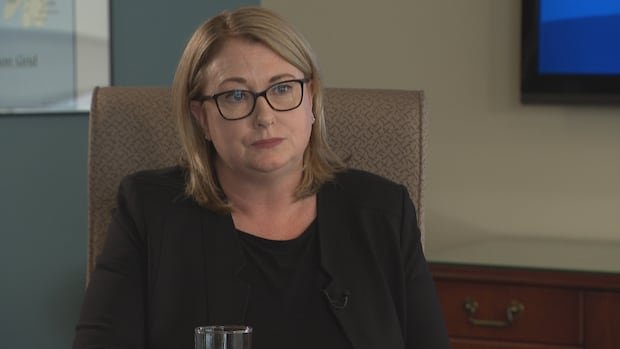
Newfoundland and Labrador Hydro’s CEO, Jennifer Williams, emphasized that the recent memorandum of understanding regarding Churchill River power is not paving the way for agreements similar to the long-standing power purchase deal from 1969. Williams expressed satisfaction with the current arrangement during an interview with CBC’s Carolyn Stokes.
The 1969 contract, still in effect, secured low power rates for Hydro-Québec over several decades, resulting in minimal benefits for the Churchill Falls (Labrador) Corporation (CFLCo) when electricity market prices surged. The newly announced three-way MOU among the province’s utilities and CFLCo outlines the framework for a potential new sales contract, along with significant capital projects and power sales linked to the river.
Prime Minister Mark Carney, alongside then-Quebec premier Christine Fréchette and Newfoundland and Labrador Premier Tony Wakeham, hailed the landmark agreement on the St. John’s waterfront. Carney described the text as the “biggest green energy initiative in North American history.”
Williams, though initially reserved in her public statements following the announcement, clarified in recent interviews that the electricity generated at the Churchill Falls plant will not be sold at a fixed rate. She emphasized that the proposed 50-year sales contract for Churchill Falls power will see a substantial escalation in price compared to the 1969 agreement.
The agreement stipulates that Newfoundland and Labrador will sell a maximum amount of power to Quebec at a new premium rate, reaching 11.5 cents per kilowatt-hour by 2041. Williams highlighted an average annual escalation of 14% in price until 2041, with further increases linked to the Consumer Price Index thereafter. She noted that without the new agreement, Hydro-Québec would continue paying a significantly lower rate until 2041.
The revised deal, which includes an extended sales agreement and increased pricing, reflects Hydro-Québec’s willingness to terminate the existing contract ahead of schedule. Williams underscored the need for additional power generation along the river to fulfill N.L. Hydro’s mandate and support industrial growth in Labrador.
The MOU also sets the stage for potential contracts related to Gull Island development, a new transmission line in Labrador, and exploratory commitments for additional energy projects. The agreement represents a significant shift in Newfoundland and Labrador’s power policy and objectives, with a focus on maximizing returns and expanding market reach.
The province anticipates finalizing the terms of the new Churchill Falls MOU by the end of the year, with political representatives slated to engage in a special debate on the agreement in the House of Assembly on September 14. The deal aims to enhance collaboration and drive sustainable energy development in the region.


