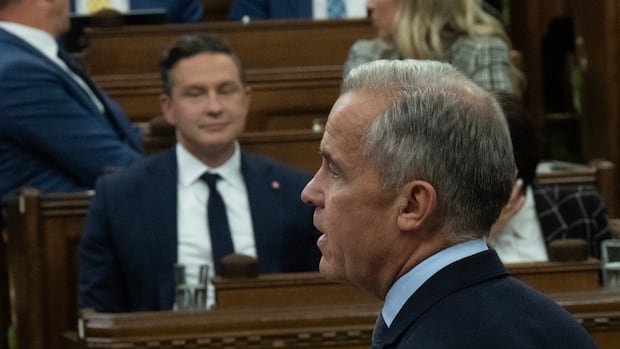
Conservatives are urging the Liberal government to disclose the contents of the U.S. tariff deal that Canada rejected last week. While some argue for transparency to promote national unity, others believe it could weaken Canada’s negotiating position.
President Trump imposed 50% tariffs on numerous Canadian imports after trade negotiations failed, despite signs of progress. Prime Minister Mark Carney stated that the U.S. demands were excessive and insufficient for Canada to agree to a final deal.
Conservative MPs are pressing Carney to reveal the specifics of the declined agreement. Conservative Leader Pierre Poilievre emphasized the importance of Canadians knowing the terms initially considered and subsequently turned down by the government.
Bloc Québécois Leader Yves-François Blanchet expressed openness to the government sharing the deal details if an agreement had been reached. However, trade lawyer Lawrence Herman advised against releasing such information, citing the sensitivity of trade negotiations and the potential impact on future talks.
Carlo Dade from the University of Calgary highlighted the value of transparency, noting that the U.S.’ requests align with those made to other countries. Meanwhile, Finance Minister François-Philippe Champagne defended the government’s transparency, stating that key details had been widely reported.
Opposing views were also voiced by Jason Kenney, who emphasized the confidential nature of negotiations, and Poilievre, who called for Parliament to address the trade dispute. Despite differing opinions, stakeholders agree on the need for some transparency while ensuring national unity amidst escalating tariffs.
Dade emphasized the importance of transparency in light of Canada’s unique position under Section 338 of the U.S. Tariff Act, suggesting it could be used to create divisions among provinces. He stressed the significance of revealing details to prevent internal discord and uncertainty within Canada.