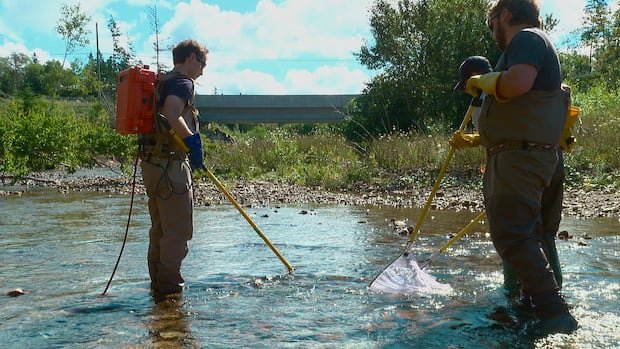
In recent years, the Margaree Salmon Association in northern Cape Breton has been utilizing electrofishing as a method to monitor fish populations in the Margaree River. This technique involves using an electric current to temporarily stun fish, allowing crews to safely capture, measure, and identify them before releasing them back into the river.
Michael Fabiano, the conservation co-ordinator of the association, mentioned that electrofishing operations are conducted from May to late September with a low two percent mortality rate among the thousands of fish handled each season. Safety of the fish is a top priority for the crew, and they avoid electrofishing in high water temperatures to prevent harm.
During electrofishing, current levels are carefully controlled to ensure fish are only stunned for a brief moment, allowing for safe handling. Crew members wear protective gear like heavy rubber gloves and chest waders to minimize the risk of electric shock. There have been no serious incidents involving electric shock among crew members during Fabiano’s 18-month tenure with the association.
The crews conduct surveys along the 120-kilometre river to identify the most productive streams and assess the overall health of the fish population. The majority of the catch comprises trout and Atlantic salmon, with occasional sightings of eels and lampreys. This season, the association has caught and released approximately 1,800 fish across nine streams, a decrease from the previous year.
Association president Paul MacNeil highlighted the increased focus on scientific research due to reduced data collection efforts by Fisheries and Oceans Canada in the past five years. Founded in 1982, the association aims to gather reliable data to monitor river health amidst changing climate conditions.
To compensate for the data gap, the association collaborated with the Chéticamp River Salmon Association to acquire electrofishing equipment. While traditional fish counting methods involve swimming the river, MacNeil emphasized that electrofishing provides more accurate data on juvenile fish populations within specific territories.
In other news:
– Halifax Mooseheads undergo one of their most aggressive off-seasons in team history.
– Cape Breton Regional Municipality considers implementing wheel boot rules for private parking lots.
– Cape Breton experiences another historical storm event, adding to its weather challenges.
– The local community in Cape Breton comes together to support each other after severe flooding incidents.
– Parts of Cape Breton brace for more rainfall following a recent intense weekend storm.