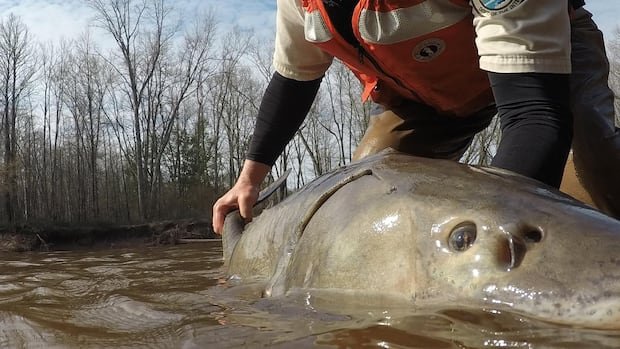
A recent study reveals that some lake sturgeon in the Great Lakes could be over 400 years old, challenging previous beliefs about their lifespan. These ancient-looking fish, known for their armored appearance, have faced severe population declines due to overfishing and habitat destruction, with their numbers dwindling by 99% historically.
Researchers, utilizing over four decades of capture data, found that calculating a sturgeon’s age by growth rings in its fin ray is not straightforward. By analyzing individual growth rates over time, they estimated that some sturgeon could live for centuries, contrary to the traditional assumption of a 150-year lifespan.
The prolonged lifespan of lake sturgeon poses new challenges for conservation efforts, especially considering their critical role in the ecosystem. Conservationist Trevor Pitcher suggests that existing plans may need adjustments to account for the longevity of sturgeon, potentially altering restoration strategies and habitat management.
Moreover, sturgeon play a vital ecological role by preying on invasive species like quagga mussels and gobies. The decline of sturgeon populations has disrupted the balance of the food chain in the Great Lakes, emphasizing the urgency of conservation efforts to restore their numbers.
Culturally, lake sturgeon hold significant importance among Indigenous communities, symbolizing wisdom and longevity. Perry McLeod-Shabogesic, an elder from Nipissing First Nation, highlights the spiritual connection to sturgeon, viewing them as revered elders in Anishinaabe tradition due to their enduring existence and historical significance.
In light of the newfound understanding of sturgeon longevity, conservationists and Indigenous communities are reevaluating their approaches to protect these ancient giants of the Great Lakes, recognizing their pivotal role in the ecosystem and cultural heritage.