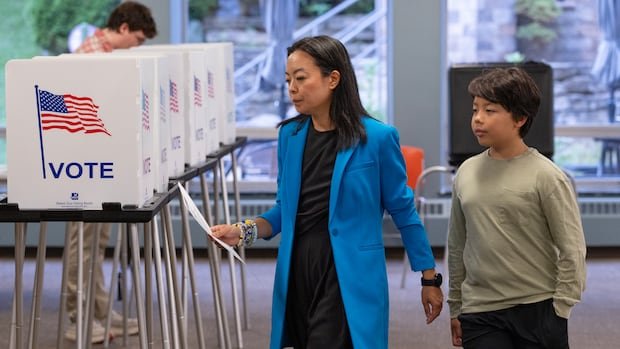
As the United States approaches the midterm elections, a competitive primary season has deepened the divide between the progressive and centrist factions within the Democratic Party. The upcoming November elections will determine control of Congress and set the stage for the 2028 presidential race.
Centrists advocate for candidates who promote moderate and practical policies as a strategy to win over Republican-held seats. On the other hand, progressives argue that uninspiring establishment candidates will not energize a coalition of young people, working-class individuals, and diverse voters crucial for the party’s success.
Hans Noel, an associate professor at Georgetown University, acknowledges the challenge of determining which faction holds greater voter appeal. While progressive candidates may alienate some traditional Democratic voters, they also have the potential to attract new voters, including those who have not previously participated in elections.
Characteristics such as personal likability also play a role in candidate appeal, making it difficult to predict electoral outcomes accurately. The primary season has seen victories and defeats on both sides, offering valuable lessons for Democrats.
In a recent primary in Wisconsin, progressive candidate Francesca Hong lost to moderate David Crowley, despite initial projections favoring Hong. Hong faced backlash for past comments supporting defunding the police and abolishing ICE, which she later distanced herself from during the campaign.
Progressive candidates have seen success in states like Michigan, where Abdul El-Sayed, campaigning on issues like healthcare reform and wealth taxation, secured a victory against a centrist opponent. However, concerns linger among some Democrats about progressive stances potentially alienating voters in key battleground states.
Critics argue that while the progressive wing brings enthusiasm, moderate candidates may have broader appeal in general elections. The debate within the Democratic Party reflects a broader struggle between ideological purity and electability, with each faction presenting its case for the party’s future direction.
The upcoming midterms present an opportunity for Democrats to capitalize on public discontent with the current administration. Whether the party leans towards progressivism or centrism, the results of the elections will shape the political landscape leading up to the 2028 presidential race.