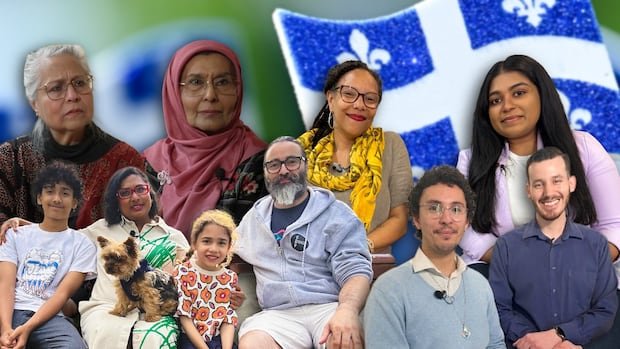
In the realm of political discussions in this province, the topic of Quebec identity, known as “l’identité Québécoise” in French, is a recurring theme. But what does this concept entail, and who holds the authority to define it? With the upcoming provincial election on October 5, I engaged with a diverse group of Quebec residents to gather a range of viewpoints.
The following narratives encapsulate the candid and nuanced exchanges I had. Conversations included dialogues with two individuals who migrated from India and Pakistan to Quebec in the 1970s during René Lévesque’s era. Additionally, I connected with young proponents of Quebec sovereignty with Indigenous and Maghrebi heritage.
Moreover, I delved into the perspectives of a Montrealer who distances herself from the Quebec identity, along with insights from others navigating their Quebec pride while staunchly advocating for English-language institutions.
Krishnavi Sivanesan, a 25-year-old Montreal native, devotes her weekends to teaching Tamil to a younger cohort who often converse in French during classes. Having experienced the struggles faced by her Tamil family in war-torn Sri Lanka, Sivanesan empathizes with Quebec’s efforts to preserve the French language. However, she believes that the discourse around non-Francophones and immigrants fails to acknowledge her community’s contributions.
Dolores Chew and Shaheen Ashraf, who have resided in Quebec for over five decades, reminisce about their early days in Quebec under René Lévesque’s leadership, where they cherished South Asian customs like enjoying chai. Their sense of belonging underwent a transformation following their participation in the 1980 referendum.
Nabil Ben Ali Ouriaghli and Benjamin Gingras, members of Oui Quebec advocating for sovereignty, envision an independent Quebec that prioritizes inclusivity and commonalities among individuals. While they are committed to spreading their message, they acknowledge the need for further outreach.
Similarly, Shereen Joseph, who found solace in Montreal after feeling disconnected in Western Canada, embraced her identity as a Montrealer upon settling in the Plateau-Mont-Royal borough. Her Malaysian background aided in her assimilation into the city’s cultural fabric, leading her to question the language tensions prevalent in the province.
Susan Perera and Allison Saunders, English school board commissioners, view English-language schools not solely as educational institutions but as platforms for community engagement and the promotion of bilingualism in Quebec. Despite proudly claiming their Quebec identity, Saunders occasionally feels at odds with certain perceptions of what it means to be a Quebecer.
These dialogues shed light on the diverse perspectives and narratives that shape the discourse surrounding Quebec identity, highlighting the complexities and nuances within the province’s cultural landscape.