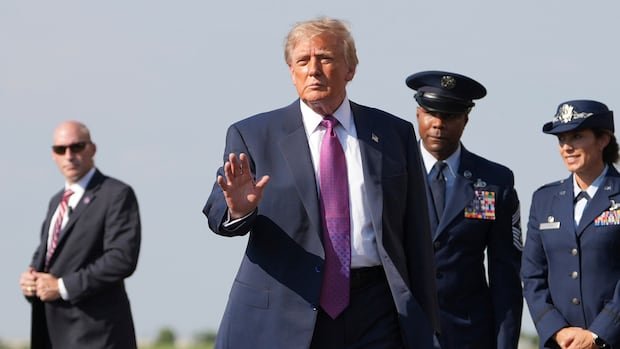
A group of U.S. lawmakers have urged President Donald Trump to halt the ongoing conflict with Iran, which marked its six-month anniversary on Friday. Trump’s stance on the conflict has been inconsistent, with him claiming that the military’s offensive actions and the blockade of the Strait of Hormuz have been effective in achieving U.S. goals.
In a recent social media post, Trump shared an image with the caption “MISSION ACCOMPLISHED 2026,” featuring AI-generated visuals including the face of Iranian supreme leader Ayatollah Ali Khamenei, who was reportedly killed during the initial airstrikes by the U.S. and Israel. Diplomatic exchanges between Tehran and Washington have been limited, with third parties handling negotiations, while Trump has been publicly focused on trade issues with Canada rather than the ongoing conflict.
As the November 3 midterms approach, it is anticipated that Trump will shift his attention to the upcoming elections, where he has been actively involved in influencing voter behavior. Representative Adam Smith of Washington, a leading Democrat on the House armed service committees, highlighted the toll the war has taken on military personnel, noting the casualties and financial costs incurred.
The military actions by the U.S. and Israel have resulted in the elimination of key Iranian figures, leading to a significant impact on Iran’s economy. The price of essential commodities such as rice and beef has surged, while Iran’s GDP is projected to decline by more than 5% this year. The conflict has not only affected Iran but has also had repercussions on the U.S., including a decrease in Trump’s approval ratings and disruptions in global oil markets.
Former U.S. diplomat Brett Bruen criticized Trump for escalating tensions, which have led to increased instability and costs globally. Iran retaliated to U.S. strikes with drone attacks and mining operations in the Strait of Hormuz, affecting the flow of oil and natural gas. Despite Trump’s claims that the strait remains open, shipping activities have significantly decreased since the onset of the conflict.
Concerns have been raised by Democrats regarding the transparency and overall cost of the war. Secretary of Defense Pete Hegseth estimated the military expenditure at $37.5 billion, but critics argue that this figure underestimates the total cost of the conflict. Calls have been made for the war to end, emphasizing the need to redirect taxpayer funds to address domestic issues.
While few Republicans oppose the war, some have criticized military strategies employed in the conflict. Representative Thomas Massie urged Trump to comply with the War Powers Act and withdraw forces, calling for an end to the prolonged conflict. Trump’s reluctance to resume negotiations with Iran has shifted the administration’s focus towards imposing economic pressure on the country, as evident in recent announcements by Treasury Secretary Scott Bessent.
Reports suggest that the U.S. will soon redeploy diplomatic staff to certain missions in the Middle East that were previously evacuated or downsized due to the conflict. Despite domestic unrest in Iran earlier this year, the U.S. opted for military intervention over diplomatic engagement. With no clear resolution in sight, concerns linger over the prolonged nature of the conflict and its impact on regional dynamics.