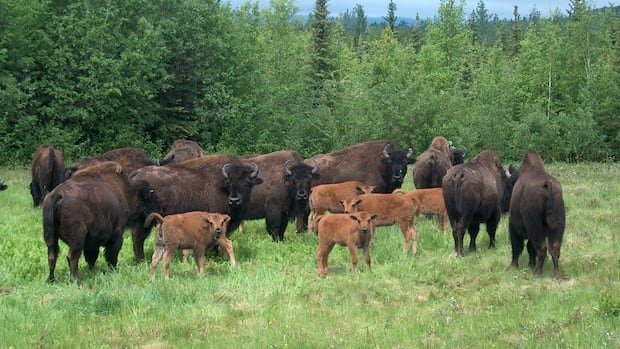
The N.W.T. Department of Environment and Climate Change (ECC) has observed a decrease in the number of bison road collisions in recent years. Between 2021 and 2025, there were 60 reported collisions, but in 2026, only one collision has been recorded so far.
Bison ecologist Terry Armstrong credits the decline in collisions to wildfires, explaining that fires influence bison movements towards burnt areas with fresh vegetation. This shift in behavior has led to fewer bison near roads, reducing collision risks.
Wood bison, classified as a threatened species regionally and nationally, have a population estimated at over 2,500 individuals. Collisions between 2021 and 2025 resulted in the deaths of at least 76 bison, with Highway 3 being a hotspot for such incidents.
As rutting season approaches from August to September, motorists are cautioned about potential encounters with aggressive bison on roads. Armstrong highlights the risks during this period when bison are focused on mating and dominance struggles, increasing the likelihood of collisions.
Armstrong warns about reduced visibility during darker hours and advises drivers to exercise caution, maintain distance from bison, and refrain from provoking them, especially during rutting season. He emphasizes the importance of respecting these majestic creatures and avoiding any attempts to interact with them.
With their significant size and historical presence, bison are a vital part of North America’s wildlife, underscoring the need for responsible coexistence to protect both humans and these iconic animals.