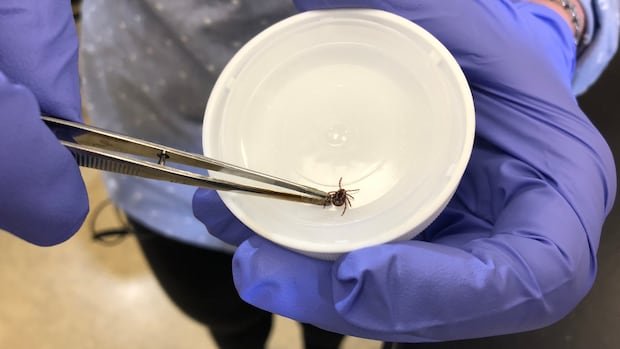
Nova Scotia’s Acadia University lab is set to receive $1.2 million in funding from the provincial government to advance research on tick-borne illnesses. Nicoletta Faraone, head of the Canadian Tick Research and Innovation Centre, emphasized the critical role of this financial support in establishing and expanding the lab’s capabilities.
The allocated funds will primarily fuel the lab’s surveillance activities, focusing on identifying tick species in the region, analyzing the pathogens they carry, and assessing their reactions to repellents and attractants. Ticks, known for transmitting diseases like Lyme disease and anaplasmosis through their bites, pose significant health risks to humans.
With cutting-edge equipment at their disposal, the lab aims to expedite pathogen testing processes. Faraone highlighted the broader objectives of the research, stating that it aims to enhance understanding of ticks and bolster preparedness in mitigating tick exposure risks.
The funding, sourced from Research Nova Scotia’s Focused Research Initiative supported by the Department of Advanced Education, underscores the growing importance of addressing tick-borne diseases. Stefan Leslie, CEO of Research Nova Scotia, emphasized the need for research outcomes to transition from theoretical insights to practical applications.
Recent data from the Public Health Agency of Canada revealed a surge in Lyme disease cases nationwide, with Nova Scotia alone reporting 2,350 cases out of over 5,800 in 2024. Additionally, other tick-borne illnesses such as anaplasmosis are on the rise, underscoring the urgency of research in this field.
In a significant development, the federal government is contributing $455,000 to the project through the Atlantic Canada Opportunities Agency. This funding injection will enable the lab to progress with its initiative to breed ticks internally, a departure from purchasing ticks from an external source.
By breeding ticks locally, researchers can delve into the genetic composition of Canadian ticks. Furthermore, the breeding program is envisioned to generate revenue by supplying tick specimens to researchers nationally and internationally. Faraone noted the successful establishment of the tickery, with ticks collected across different seasons and efforts underway to optimize breeding conditions.
The continuous support and investments in tick research not only advance scientific knowledge but also hold promising implications for public health and disease prevention efforts.