Amidst the ongoing conflict in Ukraine, where Russian forces have taken control of the country’s largest nuclear plant and targeted its power infrastructure, European and U.S. reliance on Russian nuclear fuel for their electricity grids persists.
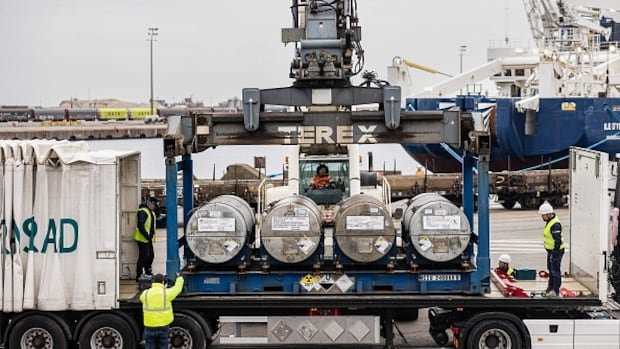
Westinghouse Electric, a Canadian-owned company, is one of the recipients of low enriched uranium (LEU) from Russia for fueling commercial nuclear reactors in the U.S., as per shipping data analysis by CBC’s investigative program, the fifth estate.
While the U.S. implemented a ban on Russian enriched uranium imports in August 2024 to reduce dependency and ensure a robust domestic fuel supply, the Prohibiting Russian Uranium Imports Act allows waivers under specific conditions until January 1, 2028.
In 2025 alone, the U.S. imported 400 tonnes of low enriched uranium from Russia, valued at approximately $1 billion US, with major recipients including subsidiaries of French-owned Framatome, Global Nuclear Fuel Americas, and Westinghouse.
Unlike the U.S., the European Union does not have a ban on Russian enriched uranium imports, and Canada has not imposed sanctions on conducting business with Russia’s Rosatom or Tenex.
Efforts to reduce reliance on Russian nuclear fuel are ongoing, with Western governments and industry aiming to enhance domestic production. Russia currently supplies a significant portion of global enriched uranium, with estimates suggesting it provides 20 to 30% of the enriched uranium used in the U.S. and Europe.
Westinghouse, a key player in the U.S. nuclear industry, is owned 51% by Brookfield Renewable Partners and 49% by Cameco Corporation. The company, along with Brookfield, did not respond to inquiries for this report.
The dependency on Russian enriched uranium is a longstanding issue that countries are working to address by diversifying their energy sources and reducing reliance on Russian supplies. Plans for new reactors, including small modular reactors, may necessitate enriched uranium, prompting governments to explore alternative sources.