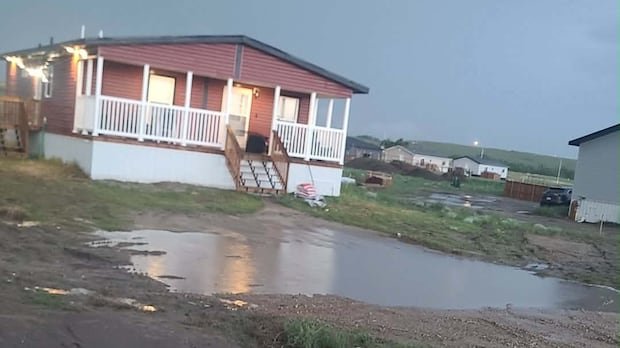
Vanessa Big Eagle, a band councilor overseeing Pheasant Rump Nakota First Nation homes, experienced severe weather damage to her own residence. She described the May winds as unusually intense, causing significant harm to 23 out of 54 homes in her community located 160 kilometers southeast of Regina. Among the damaged homes, her own suffered the most, with a large portion of the roof blown off. Insurance claims have been filed for the affected homes managed by the First Nation, with many still in disrepair, leading one family to seek temporary accommodation in a hotel.
Recent data reveals a surge in insured losses due to extreme weather in Saskatchewan, potentially resulting in higher insurance premiums. Catastrophe Indices and Quantification Inc. reported that last year saw a record-breaking $450 million in insured losses from severe weather events, the highest in the firm’s data collection history since 2008. Notably, extreme winds in June caused the most significant insured loss of $240 million, followed by wildfires in the north during the previous summer.
Laura Twidle, the president and CEO of Catastrophe Indices and Quantification Inc., highlighted the exceptional nature of the past two years in terms of severe weather impact. She emphasized the unprecedented insured losses from fires in Saskatchewan, underscoring the necessity for robust insurance coverage and risk management strategies.
Jason Thistlethwaite, a professor at the University of Waterloo, noted that the repercussions of escalating insured losses may lead to higher premiums and reduced coverage for property owners, even those who have not directly experienced damage. He advocated for proactive measures to mitigate climate-related risks, stressing the importance of shifting from reactive disaster recovery approaches to preventative strategies.
Repair companies in Saskatchewan, such as Leeway Mechanical Inc. and Fire & Flood, reported a surge in demand for services to address weather-related property damage. Duane Lee and Allison Thompson of Leeway Mechanical Inc. observed a significant increase in repair requests, including fixing water damage and roof repairs. Similarly, Chris Kaban from Fire & Flood noted a rise in calls for basement flooding incidents, attributing the spike in demand to severe weather patterns. The company has expanded its workforce to cope with the growing workload, citing a surge in weather-related incidents reminiscent of the early 1990s.