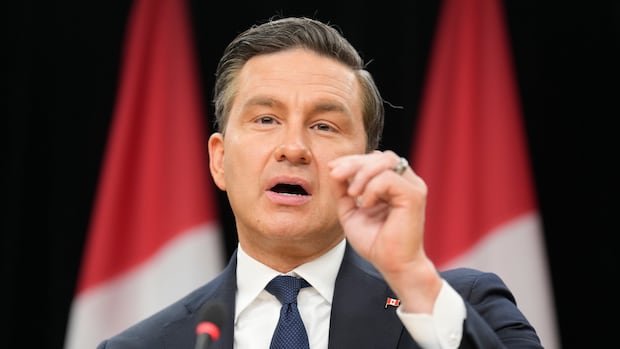
Conservative Leader Pierre Poilievre is urging Prime Minister Mark Carney to display strength in the ongoing trade negotiations with the United States. Poilievre, along with Canada-U.S. relations critic Shuvaloy Majumdar, expressed concerns in a letter to Carney, highlighting instances where Ottawa has conceded to various demands from the U.S. over the past year.
They pointed out actions such as scrapping the digital service tax, eliminating Canada’s counter-tariffs, and agreeing to share net toll revenue from the Gordie Howe International Bridge. Poilievre and Majumdar criticized Carney’s stance that no deal is better than a bad deal, emphasizing the negative impact on Canadian manufacturing jobs that rely on cross-border supply chains.
Poilievre emphasized in the letter that Canada has continuously made concessions without receiving anything in return, leading to increased tariffs on Canadian steel, aluminum, and lumber by the U.S. The Conservatives are advocating for a fair deal that includes zero tariffs on softwood lumber, removing sectoral tariffs on steel and aluminum, a tariff-free auto pact, and exemption from Buy America rules for infrastructure projects across all government levels.
With impending 50% U.S. tariffs on Canadian goods set to take effect soon, trade discussions between the two nations have intensified. The Conservatives are also calling for the establishment of a critical minerals reserve to bolster Canada’s negotiation position, which would be accessible to countries offering tariff-free market access.
Meanwhile, dairy farmers in Canada are urging the government not to compromise on the supply management system that shields the domestic dairy industry. Despite pressure from the U.S. regarding dairy trade issues, Carney affirmed the government’s commitment to the supply management system. The Dairy Farmers of Canada cautioned against further concessions in trade talks, citing past instances where Canada’s compromises led to new demands from the U.S.
As negotiations progress, Canada is reportedly considering meeting certain U.S. requests, such as lifting bans on American alcohol sales, in exchange for tariff relief. The Canadian side is also contemplating actions like removing retaliatory tariffs on U.S. autos and making adjustments in the dairy sector. In return, Canada is seeking the U.S. to revoke the new tariffs, provide relief from sectoral tariffs, and agree to resume CUSMA discussions in the upcoming months.