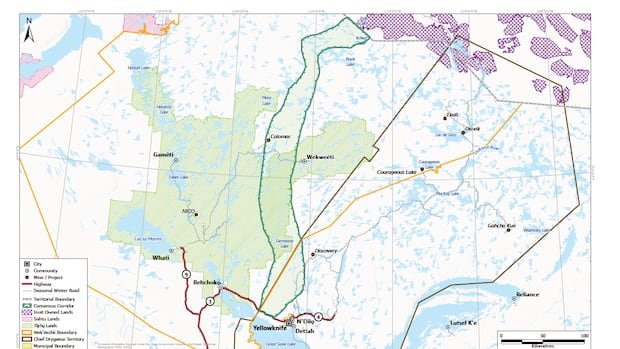
The Yellowknives Dene First Nation and the Tłı̨chǫ government have jointly agreed on the selected site for the Arctic Economic and Security Corridor. This 400-kilometre all-season road will link the Grays Bay Road and Port in Nunavut to the N.W.T. highway system. It is part of the nation-building projects aimed at enhancing military presence and mineral exploration in Northern Canada, with potential spur roads connecting Wekweètì and Gamètì to the main route.
Led by the Yellowknives Dene First Nation and the Tłı̨chǫ government, in collaboration with territorial and federal authorities, the project marks a significant step towards showcasing Indigenous leadership in major infrastructure initiatives, as highlighted by Tłı̨chǫ Grand Chief Jackson Lafferty.
The proposed corridor, approximately 30 kilometers wide, traverses the Slave Geological Province, with project leaders emphasizing that it represents an initial phase in the development process. Both Chief Ernest Betsina and Chief Fred Sangris of the Yellowknives Dene First Nation stressed in a joint statement that the corridor is a proposal, not a finalized road, and underscored efforts to minimize impacts on the caribou population, a crucial consideration given the region’s significance for mineral exploration and caribou habitat.
After more than a year of collaboration, the agreement reflects a blend of community-driven research, traditional knowledge, and scientific insights from both Indigenous and Western perspectives. Premier R.J. Simpson expressed the Northwest Territories government’s support for the consensus, highlighting the importance of Indigenous-led development and intergovernmental partnerships in shaping the region’s future.
Upon completion, the corridor will establish Canada’s inaugural land-based connection to Nunavut’s Arctic coast. Moving forward, the Tłı̨chǫ government and Yellowknives Dene First Nation will engage their members, neighboring Indigenous communities, and local residents to gather feedback on the proposed route, shaping the project’s direction based on community input.