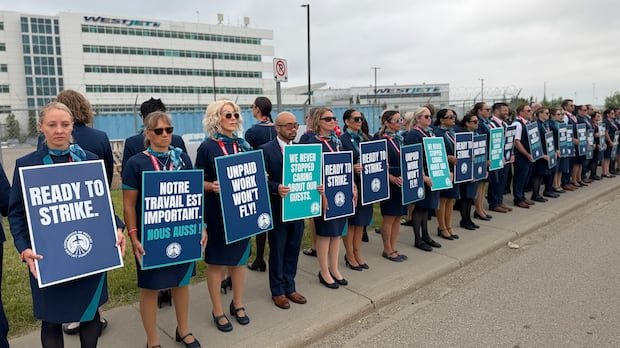
WestJet, the second-largest airline in Canada, is making preparations for a possible shutdown in anticipation of a strike or lockout by its flight attendants. However, the decision to gradually cease operations does not necessarily indicate an impending labor dispute, as negotiations between the union and the company are ongoing.
In a communication shared with some employees and disclosed by CBC News, WestJet’s Vice President of Inflight Operations, Robert Antoniuk, clarified that the agreement reached between the union and the airline is not a sign of escalating towards labor action. It is an arrangement outlining how operations would be halted if talks between CUPE WestJet Component and the company fail.
Representatives from CUPE affirmed that the union members have consistently expressed their desire for a fair deal without resorting to a strike. Federal mediators are actively engaged in the negotiations, as confirmed by Federal Transport Minister Steven MacKinnon, who expressed optimism about reaching a mutually acceptable agreement.
According to John Gradek, a former Air Canada director and current faculty lecturer at McGill University specializing in supply networks and aviation management, it is standard practice for airlines like WestJet to have contingency plans in place to wind down operations before a labor dispute is officially declared. This planning is crucial to ensure that aircraft and crew members are not stranded abroad in the event of a shutdown.
Notice of a strike or lockout must be provided at least 72 hours in advance. If a strike were to occur, WestJet may need to cancel flights for thousands of passengers starting from July 30. Gradek highlighted that for distant destinations such as Rome or Tokyo, a 72-hour notice period might not be sufficient to manage disruptions effectively.
While WestJet has not announced any specific flight cancellations related to a potential labor dispute, the airline has offered to waive cancellation or change fees for passengers traveling between July 30 and August 4. The unionized flight attendants represented by CUPE WestJet Component could legally strike by August 2 if an agreement is not reached, following a strong affirmative vote for striking. The ongoing negotiations have primarily revolved around the compensation structure for flight attendants and the issue of unpaid work hours.
The current payment system at WestJet compensates flight attendants based on “credit hours,” which may not account for all hours worked, as claimed by the union. While WestJet maintains that flight attendants are adequately compensated under the existing contract, the disagreement over unpaid work hours remains a contentious issue.
WestJet’s history includes a major labor dispute in 2024 involving unionized airline mechanics, which disrupted travel plans for many passengers over the Canada Day weekend. The airline is striving to reach a resolution with its flight attendants to avoid potential disruptions to its services.