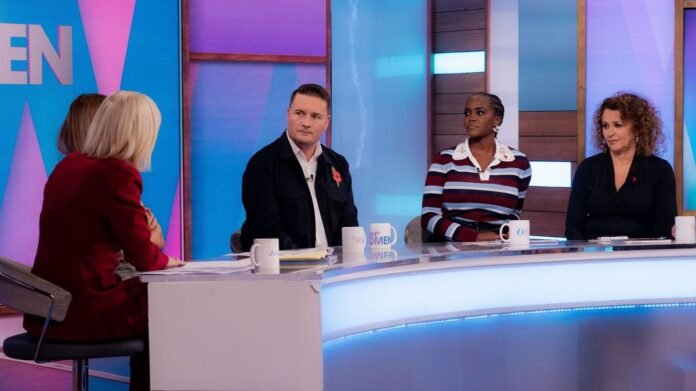
Wes Streeting recently shared his experience on the popular show “Loose Women,” admitting it was the most nervous he has ever felt, expressing concerns about accidentally causing damage to the set.
During his appearance on the ITV daytime program, the Health Secretary humorously mentioned nearly knocking over the table and revealed he had been battling a severe cold all week. Streeting’s nervousness was palpable as he entered the set, fearing a mishap due to his cold recovery efforts.
The main purpose of Streeting’s appearance was to emphasize the inclusion of menopause-related queries in NHS health screenings for the first time. This significant step is expected to benefit millions of women in England.
Addressing the audience at the beginning of his interview, Streeting confessed, “I nearly knocked the table over. This is the most nervous I’ve ever felt. I’ve just walked on, I nearly knocked the set over, I’m recovering from a stinking cold, I’ve been gargling TCP all week just so I could get on this programme, and I thought great, I’m going to trip up or I’ll destroy the set. I’ve made it in one piece.”
The host, Jane Moore, lightened the mood by joking, “It’s because you care, Wes.”
Streeting also announced a new initiative to support women dealing with menopause, highlighting that many have suffered in silence for too long. Menopause typically occurs between the ages of 45 and 55 when hormone levels decrease, often accompanied by perimenopause, a transitional phase preceding the final menstrual period.
NHS health checks, available to eligible individuals aged 40 to 74 every five years, aim to identify potential risks of conditions like heart disease, diabetes, dementia, and stroke.
In a statement, Streeting expressed, “Women have been suffering in silence for far too long and haven’t been encouraged to open up about the symptoms they’re experiencing. This Government is overhauling women’s healthcare and giving those experiencing menopause and perimenopause the visibility and support they have long been asking for.”
This move marks a significant advancement in women’s health and acknowledges the importance of providing support for menopausal and perimenopausal women.

