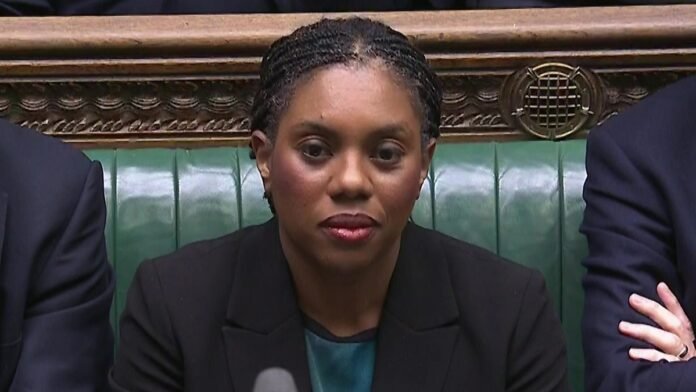
Kemi Badenoch faces criticism for perceived indecisiveness in response to Robert Jenrick’s endorsement of a burqa ban. Despite Badenoch’s prior stance against banning the burqa and rejecting the notion of policing women’s attire, Jenrick, the Shadow Justice Secretary, diverged from the party line by expressing support for a potential ban. He emphasized the importance of upholding core British values and addressing societal challenges, such as the use of burqas and sharia courts.
Drawing on the example of Italy, where Prime Minister Giorgia Meloni proposed legislation to outlaw burqas and niqabs in public spaces, some Conservative figures, including former Home Secretary Suella Braverman and Tory chair Kevin Hollinrake, echoed support for a similar ban in the UK. This move aligns with France’s prohibition of burqa wear in public areas since 2010.
In contrast, Badenoch affirmed that her leadership within the Conservative party would not advocate for a complete burqa ban, citing practical challenges like monitoring compliance and the strain on prison resources. Nigel Farage, while critical of burqas as “anti-British,” stopped short of endorsing a ban, calling instead for a national discussion on the issue.
The debate intensified as Labour MP Sam Rushworth condemned proposals for a burqa ban as contradictory to British values. Labour’s response highlighted the apparent discord within the Conservative party, with Badenoch facing accusations of weakness in managing dissent within her ranks.
Critics, including a spokesperson from the Muslim Council of Britain, denounced Jenrick’s proposal as a restriction on women’s freedom of choice and a diversion from pressing national issues. They emphasized the need for genuine leadership focused on substantive challenges rather than symbolic debates.
In response to Downing Street, emphasizing religious tolerance and individual freedom, the ongoing discourse underscores the complex intersection of cultural values, societal integration, and individual rights in the UK political landscape.

