U.S. military forces carried out a strike on Iranian rocket launchers in the Strait of Hormuz on Sunday, marking the first military operation in a month and breaking a period of relative calm in the ongoing conflict that has spanned over six months. An official, speaking anonymously, disclosed that Iran’s Islamic Revolutionary Guard Corps (IRGC) was seen preparing to launch rockets equipped with sea mines into the strait. Last week, the U.S. military completed the clearance of sea mines from the international shipping routes in the strait.
Reports from semi-official Iranian news sources indicated hearing explosions near Larak Island in the strait. Subsequently, Iranian state television broadcast footage purporting to show ballistic missiles being fired by Iran at U.S. bases in Jordan in retaliation to the American strikes. Jordan’s armed forces reported intercepting eight missiles breaching the country’s airspace early Monday in the Middle East region.
Contrary to Iran’s claims of aggression, U.S. military officials characterized the strikes as a “limited, precise action” targeting minelaying operations. The U.S. Central Command asserted that Iran had instigated the threat, necessitating the U.S. military’s intervention to safeguard civilian mariners, commercial shipping, and global commerce.
A return to overt conflict poses significant risks for the region, where Iran has previously targeted U.S. military installations and infrastructure in Gulf nations since the conflict began on February 28. The last confirmed U.S. military operation against Iran was on July 29, involving strikes on multiple Revolutionary Guard targets. Following the intervention, U.S. President Donald Trump refrained from new strikes at the behest of Gulf allies Qatar, Saudi Arabia, and the United Arab Emirates.
The recent escalation in hostilities follows the Trump administration’s shift towards imposing economic sanctions as a means to pressure Iran, moving away from direct military actions. Concerns arise over dwindling munitions stockpiles after prolonged conflict, raising apprehensions about potential impacts on U.S. military readiness elsewhere.
Amidst the ongoing conflict, President Trump’s rhetoric of swift resolution appears to be waning, with indications that Iran’s leadership is under substantial pressure. According to Trump, the U.S. and Israel’s joint campaign has severely weakened Iran’s naval and air capabilities. Iranian estimates suggest the country has incurred significant direct and indirect damages amounting to $270 billion USD.
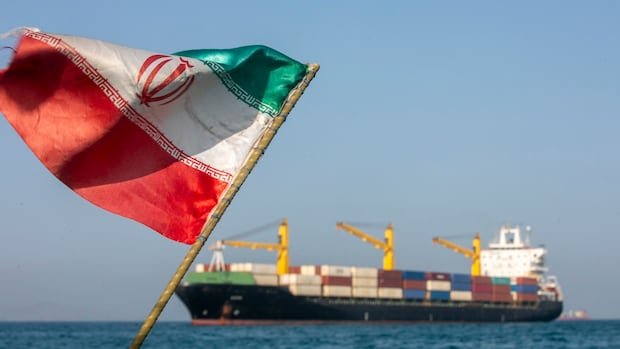
Despite facing substantial losses, Iran maintains leverage through its activities in the crucial Strait of Hormuz, where a reduced number of vessels are navigating due to the risks posed by Iranian drones and missiles. The strait, a vital passage for global oil transportation, remains under Iranian influence, affecting the flow of oil shipments significantly.
President Trump’s assertions of the strait being open contrast with reports of reduced commercial traffic levels in the area. An incident involving a tanker ship north of Khasab, Oman, was reported by the United Kingdom Maritime Trade Operations, noting no casualties or environmental harm. The responsible party for the incident remains unidentified, with ongoing monitoring by military entities to ensure maritime security in the region.