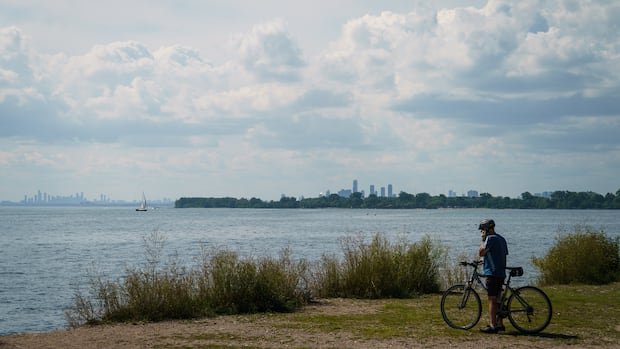
The Great Lakes, a significant reservoir of freshwater and vital water source for approximately 40 million individuals, have historically represented the close relationship between Canada and the U.S. President Donald Trump made a bold move in his trade dispute with Canada by signing an executive order on Thursday to rename Lake Ontario as Lake America.
Although it remains uncertain whether Trump has the authority to unilaterally change the lake’s name, which has been internationally recognized for centuries, this action is part of a broader effort by the Trump administration to impede collaborative efforts between the U.S. and Canada in scientific research and environmental restoration within the Great Lakes region.
Aaron Fisk, a professor at the University of Windsor’s Great Lakes Institute for Environmental Research, expressed dismay at the current U.S. administration’s stance on environmental issues and science, emphasizing the importance of evidence-based decisions for environmental preservation.
The Trump administration’s extensive reductions in federal public service have significantly impacted renowned U.S. scientific organizations like the National Oceanic and Atmospheric Administration and the Environmental Protection Agency, adversely affecting monitoring and research activities in the Great Lakes area.
Joel Brammeier, president and CEO of the Alliance for the Great Lakes, emphasized the necessity of collaborative efforts between the U.S. and Canada to effectively manage and preserve the shared waters of the Great Lakes, highlighting the challenges posed by political boundaries in water management.
Despite widespread budget cuts, bipartisan support has emerged to sustain the Great Lakes Restoration Initiative, a long-standing program aimed at ecosystem restoration and pollution mitigation. The U.S. House of Representatives recently approved the initiative’s reauthorization, securing substantial federal funding annually for local communities in the region, showcasing bipartisan backing for the program.
The Great Lakes region, integral to industrial development in both countries, has faced environmental challenges due to historical pollution and the emerging threats of climate change. Experts like Mike Shriberg from the University of Michigan’s Water Center underscore the importance of closely monitoring water-related challenges brought about by climate change, such as shifting precipitation patterns and increasing water demand.
Looking ahead, experts like Andrew Gronewold from the University of Michigan anticipate difficult decisions on the utilization of Great Lakes water. Efforts are underway to safeguard the Great Lakes Compact and Agreement, which govern water usage among U.S. Great Lakes states, Ontario, and Quebec, as external pressures for water usage, particularly in agriculture and industry, are expected to rise in the future.