On Monday, the Trump administration announced a new regulation that will impose further limitations on China’s ability to obtain top-tier AI chips from manufacturers such as Nvidia. This announcement coincides with U.S. President Donald Trump’s visit to China for discussions with President Xi Jinping.
These updated export restrictions on chips to foreign data centers in nations like Malaysia and Thailand are expected to negatively impact Chinese firms that rely on these centers to access sophisticated chips for training their AI systems.
This new regulation underscores the Commerce Department’s efforts to demonstrate that it is taking action against Chinese access to crucial U.S. technology. This comes in response to reports suggesting that the agency overlooked the illegal smuggling of advanced Nvidia AI chips into China and failed to prevent Chinese access to overseas data centers that allowed them to bypass the imposed restrictions.
Trump is scheduled to meet with Xi on Thursday in Shenzhen, the southern Chinese city hosting this week’s APEC summit. It is common for Trump to announce punitive actions or threats related to technology against Beijing before such meetings.
Additionally, the new rule mandates that companies in Singapore, Thailand, Malaysia, Indonesia, and Brazil must apply for U.S. export licenses for advanced chips, as these countries are identified as having a higher-than-average risk of illegally redirecting chips to China.
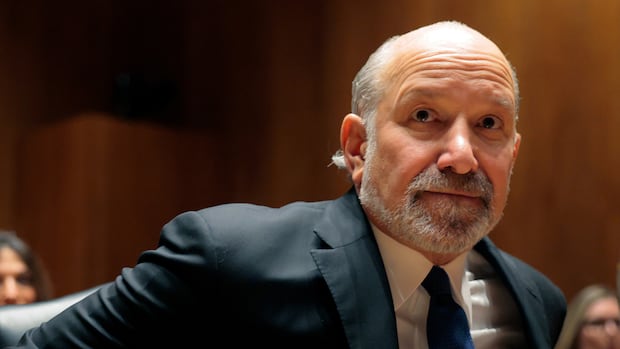
U.S. Commerce Secretary Howard Lutnick faces scrutiny in connection with the Nvidia spy scandal, with some attributing blame to him for advocating the sale of chips to China to inflate Nvidia’s stock and potentially benefit Cantor Fitzgerald, the financial services firm managed by his sons.
Lutnick accompanying Trump on China visit
The Commerce Secretary is traveling with Trump to China, signaling that the president continues to back Lutnick, who is under significant pressure for his inaction following Nvidia CEO Jensen Huang’s resignation last week.
Huang resigned after acknowledging an affair with an executive from Megaspeed, a cloud company based in Singapore and a partner of Nvidia.
According to a statement from the Commerce Department, “The rule aims to ensure that current restrictions on sensitive American technology access cannot be evaded through remote computing arrangements involving data centers in third-party nations.”
-
What will it take for the world’s superpowers to agree on AI regulations in war?
-
Trump downplays FBI probe into Nvidia chief’s affair with alleged spy
The statement indicated that the rule was formulated by the Department of the Treasury and the National Security Council, which also commanded its publication.
The new limitations will not extend to systems utilized by online retailers and social media platforms, which the department maintains do not pose the same risk to national security.
Furthermore, these regulations officially revoke the Biden administration’s rule that restricted global access to AI chips through licensing processes.
The Commerce Department previously stated that it would not enforce the rule in early 2025 and intended to rescind and replace it. However, it did not take action until Monday, allowing a significant number of restricted Nvidia chips to reach data centers used by Chinese AI enterprises.