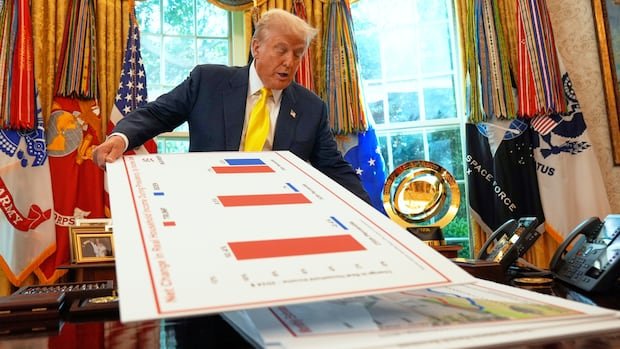
In his state of the union address in March 2025, President Donald Trump expressed optimism about tariffs bringing in substantial revenue and creating unprecedented job opportunities. However, the promised economic benefits have yet to materialize, evident from the soaring U.S. government debt exceeding $40 trillion. This surge in debt has triggered concerns in the bond market, exerting pressure on yields and interest rates.
Despite the adverse impact of tariffs on some sectors, they have proven to be lucrative for certain entities, leading to a significant wealth transfer from lower-income and middle-class individuals to affluent corporations. Economists highlight that tariffs have predominantly favored wealthy and well-connected companies, exacerbating economic inequalities within the U.S.
Moreover, experts assert that tariffs have aligned with the broader economic agenda of the Trump administration and the Republican Party, which has leveraged tax policies to achieve similar outcomes. The implementation of tariffs has accentuated the redistribution of wealth upwards, benefiting large corporations and individuals with political connections while burdening lower-income households.
Furthermore, the arbitrary nature of tariff exemptions and rebate systems has further reinforced the concentration of wealth among influential corporations. Notably, the U.S. Treasury has disbursed over $100 billion in refunds to businesses affected by tariffs, with major corporations like Walmart and Target reaping substantial benefits.
The preferential treatment extended to politically connected corporations in tariff-related matters has raised concerns about favoritism and transparency issues. Studies indicate that companies with political affiliations, particularly those supporting Republican politicians, have been more successful in obtaining tariff exemptions, underscoring the influence of political connections in tariff-related decisions.
Despite assurances from corporations that tariff refunds will lead to price reductions for consumers, economists remain skeptical about the trickle-down effect. Consumer data suggests that the burden of tariffs primarily falls on U.S. buyers, with minimal relief reaching the end consumers. This disparity in the distribution of tariff costs underscores the challenges faced by average Americans in the current economic landscape.
As the economic implications of tariffs continue to unfold, it becomes evident that the revenue generated from tariffs is insufficient to offset the tax cuts predominantly benefiting the wealthy. The escalating U.S. debt levels and associated debt-servicing charges further underscore the challenges posed by the current tariff policies and their impact on the broader economy.
In conclusion, while tariffs were initially touted as a mechanism to revitalize American industries and create jobs, the reality has painted a different picture, emphasizing the need for comprehensive economic strategies beyond tariffs to address existing challenges and promote inclusive growth.