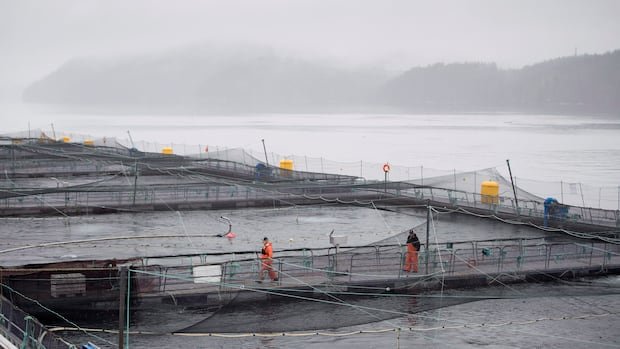
A recent study by the Pacific Salmon Foundation reveals a higher prevalence of viral heart disease, specifically heart and skeletal muscle inflammation (HSMI), in open-net salmon farms in the Broughton Archipelago, B.C. The research found HSMI in five out of seven salmon farms in the area, with the disease-causing virus, piscine orthoreovirus (PRV), capable of spreading to wild fish in the surrounding waters.
Lead author Emiliano Di Cicco emphasized that the occurrence of the disease is more widespread than previously believed. Another study in 2017 by Di Cicco and his team had already identified the disease in one out of four farms, indicating a significant presence. The disease, when infecting Pacific salmon, can lead to anemia, inflamed hearts, damaged livers and kidneys, and jaundice.
Despite the severity of the findings, the Department of Fisheries and Oceans (DFO) in B.C. currently classifies PRV as non-pathogenic, a classification Di Cicco urges to be revised. He also advocates for uniform diagnostic criteria for HSMI to be aligned with global standards, citing discrepancies in the current evaluation methods used by DFO.
DFO has responded by stating it will review the study and incorporate the findings into future assessments. The agency emphasized the collaboration with scientific experts in establishing diagnostic criteria for HSMI, ensuring scientific rigor and alignment with international standards.
In collaboration with the Mamalilikulla, ʼNa̱mǥis, and Ḵwiḵwa̱sut’inux̱w Ha̱xwa’mis First Nations, the study sheds light on the impact of salmon farming on wild populations. Indigenous leaders, including Rick Johnson and Don Svanik, expressed their concerns and longstanding efforts to address the environmental implications of open-net pen salmon farms on salmon populations and the ecosystem.


