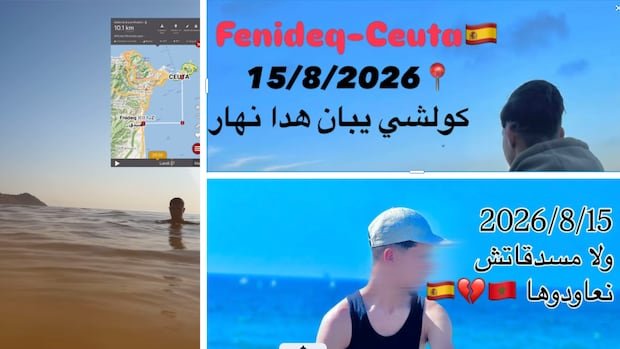
Amid the imminent arrival of a significant number of migrants in Europe, a brief video shared on Instagram gained substantial attention with 1.4 million views. The video depicted a young man partially submerged in water, followed by footage of land in the distance, with a map illustrating a sea route from Fnideq, Morocco, to Ceuta, a Spanish territory in Africa. The account holder later suggested in comments that they had successfully reached their destination.
Numerous viral posts on various social media platforms, including Instagram and TikTok, seemed to play a role in mobilizing two waves of irregular migration from Morocco to Ceuta. The most recent attempt on August 15 resulted in multiple arrests. These posts were linked to online communities focusing on migration-related content such as music, memes, and imagery, often targeting the aspirations of African and Middle Eastern youth seeking better opportunities abroad.
While there is a debate among authorities and organizations regarding the orchestrator of the events in Ceuta and whether migration was manipulated for strategic purposes, it is evident that misinformation spread through multiple online channels contributed to the influx of migrants this summer.
CBC’s visual investigations team, in collaboration with Sebastian Vandermeersch from the investigative collective Bellingcat, identified several active social media accounts, particularly on Instagram, leading up to the initial wave on July 30. The surge in posts was fueled by false information suggesting a change in Spain’s policy towards migrants arriving by sea, resulting in a massive influx of over 72,000 individuals on that day.
Although the majority of those who crossed on July 30 have since returned to Morocco, approximately 5,000 individuals remain in Ceuta, with tragic reports of nearly 100 fatalities during the attempted crossings. The situation underscores the real-world impact of misinformation when disseminated across online platforms, particularly targeting vulnerable populations seeking better prospects.
Ahead of the subsequent wave on August 15, efforts were made to fact-check content on Meta and TikTok to prevent criminal exploitation of migrants through misinformation. Despite these measures, a new wave of posts emerged promoting the next opportunity for entry into Spain, with familiar accounts from the July 30 events resurfacing alongside new profiles.
The surge in social media activity preceding these events was partly fueled by the increasing number of migrants successfully reaching Ceuta even prior to the misinformation campaign. Ceuta had become a popular entry point into Spain, with growing migration numbers recorded in the first quarter of the year, possibly due to stricter controls on other migration routes.
While social media played a role in shaping perceptions around migration, it did not solely drive the desire to migrate, which was already prevalent among many individuals seeking better prospects. The accounts promoting migration-related content reflected the disillusionment and desperation of young people in North Africa and beyond, with aspirational messaging portraying migration as a pathway to a brighter future.
The response to these posts highlights the deep-seated challenges faced by vulnerable populations, including high unemployment rates and limited political agency, prompting many to view migration as a viable option. The accounts promoting migration typically originate from North African countries like Morocco and Algeria, with some links to Italy and Turkey, using imagery and language that romanticize migration to European destinations.
The use of popular hashtags and symbolic imagery further reinforced the allure of migration, with posts showcasing iconic landmarks like the Eiffel Tower and emphasizing the search for opportunities abroad. Despite attempts to reach out to these accounts for insight, response efforts were unsuccessful, underscoring the complex dynamics at play in the digital landscape surrounding migration issues.


