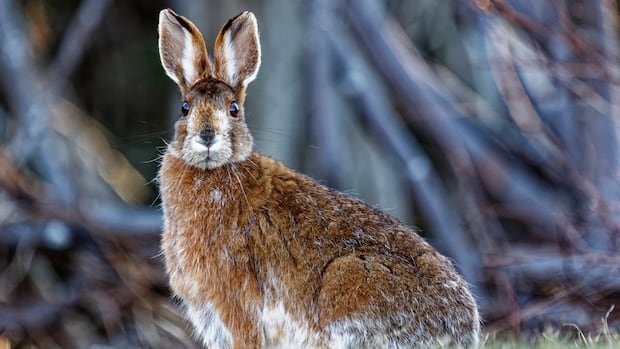
Snowshoe hares have become more prevalent on Prince Edward Island following post-tropical storm Fiona, according to a wildlife biologist from the province. Garry Gregory, working with P.E.I.’s fish and wildlife division, mentioned an increase in reports from Islanders who are observing more “rabbits” in their surroundings. However, these animals are not actually rabbits, as rabbits are not indigenous to the region. Gregory clarified that what Islanders are spotting are most likely snowshoe hares.
While there is no formal tracking data confirming an uptick in the snowshoe hare population, Gregory indicated that alterations to the landscape post-Fiona make it plausible that the numbers have risen. The storm in 2022 left behind dense foliage and debris in forests across P.E.I., providing ideal cover for hares. This cover allows the hares to hide effectively, increasing their survival rates and potentially leading to a population increase.
The aftermath of the storm also created favorable conditions for winter forage for snowshoe hares. The downed trees allowed sunlight to reach the forest floor, promoting the growth of plants that hares feed on during winter. Gregory highlighted species like willows, grey birch, maples, and pin cherry as essential winter food sources for snowshoe hares.
Additionally, the new habitat benefits other wildlife species such as songbirds and American woodcock, which utilize the early successional growth. Although more hares on the ground do not necessarily mean a surge in predators on P.E.I., Gregory noted that the predator-prey relationship differs from northern regions where species like lynx are closely tied to snowshoe hare populations.
For Islanders encountering hares in their yards, Gregory advised against feeding them, as hares typically avoid human contact and have sufficient natural food sources. Attempting to feed hares could attract them closer to domestic animals, posing a risk. Regarding ticks found on hares, Gregory assured the public that the tick species commonly seen on hares are not the ones associated with Lyme disease and generally do not pose severe health risks to the animals.