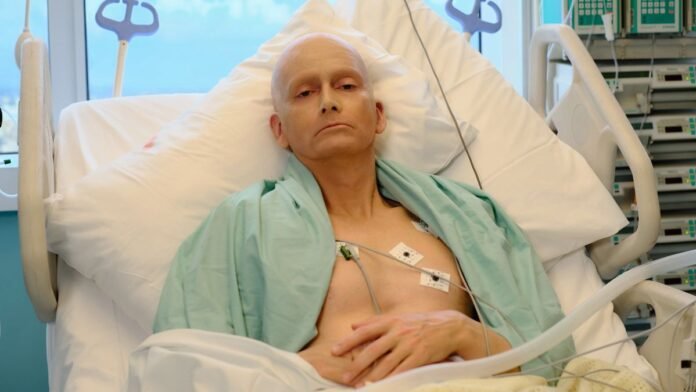
Russian authorities have acknowledged that a key figure involved in the infamous polonium poisoning case was suffering from cancer at the time of his death three years ago. Dmitry Kovtun, who was accused by the UK of being complicit in the radioactive murder of Vladimir Putin critic Alexander Litvinenko in 2006, passed away at the age of 56, initially attributed to Covid complications.
His alleged accomplice, Andrey Lugovoy, has now confessed that Kovtun had kidney-related oncology and various health issues. Lugovoy’s statement on a televised broadcast suggested that the polonium-210 dose Kovtun received nearly two decades ago had a lasting impact on his health condition.
During the broadcast, Lugovoy hinted at the possibility that the dose Kovtun ingested affected his health. Lugovoy, who is wanted for trial in the UK, refrained from further comment, expressing concerns about potential Western media attention.
The duo was accused of poisoning Litvinenko by spiking his tea during a meeting at a London hotel. Litvinenko, a former FSB agent openly critical of Putin, suffered a protracted and painful demise, attributing blame to Lugovoy and Kovtun. The incident severely strained UK-Russia relations.
A judicial report implicated Lugovoy and Kovtun in Litvinenko’s poisoning and suggested that the assassination was likely sanctioned by Putin himself. In 2022, Lugovoy described Kovtun’s death as a sudden result of a severe illness linked to a coronavirus infection, mourning the loss of his close friend.
Reports from a state news agency indicated that Kovtun succumbed to the effects of Covid in a Moscow hospital. Lugovoy, a staunch Putin supporter and politician, maintains his innocence, alleging a setup orchestrated by British intelligence or anti-Putin Russian exiles. Traces of Polonium-210 traced back to Moscow and Germany, where Kovtun resided.
Radioactive evidence linked the suspects to hotels they stayed in, but Putin denied extradition requests for Lugovoy and Kovtun to face trial in London. Lugovoy faced reports of his own prostate cancer in 2023, with leaked medical records allegedly hacked by a Ukrainian cyber group.
Ukrainian sources suggested a connection between their illnesses and the polonium poisoning incident due to the cancer-inducing properties of even small doses of polonium-210. Following their return from the UK, both Lugovoy and Kovtun sought treatment at a Moscow hospital specializing in radiation-related ailments. Lugovoy welcomed a new child with his wife post the poisoning scare.