Klaus Koehler, a plant enthusiast, made an unusual discovery while exploring Sylvia Grinnell Territorial Park near Iqaluit in July. He stumbled upon a rarely seen species in the Arctic, raising concerns about the potential impact of invasive plants as the region warms due to climate change.
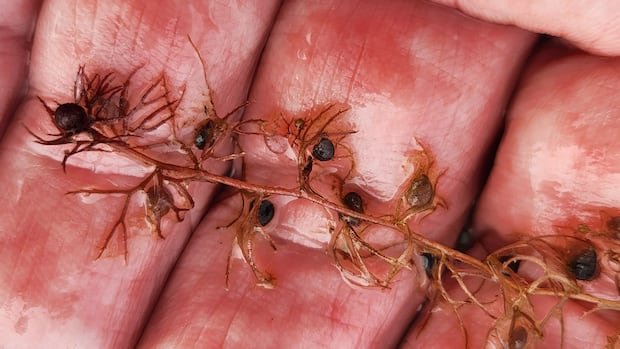
During his walk, Koehler reached into a pond and retrieved a brownish weed-like plant known as bladderwort. Although inconspicuous to the untrained eye, Koehler recognized this unique plant by its distinct features.
Bladderwort is a carnivorous plant covered with small black bladders containing partially digested flies. Typically found in more temperate climates, this insect-eating species seldom ventures into tundra regions.
The last documented instance of bladderwort in the area was in 2012 when scientists found samples near Kimmirut, approximately 120 kilometers southwest of Iqaluit. Their findings, recorded in the scientific journal Phytokeys, highlighted the discovery of over 30 new plant species during multiple Arctic expeditions.
Koehler views this finding as a potential indicator of shifting climate patterns. While the Arctic has historically had limited invasive species due to harsh conditions, the warming environment is now conducive to the growth of plants not native to the region.
He foresees a transformation in the ecosystem as warmer temperatures lengthen the vegetation period in the Arctic. This shift may lead to the proliferation of both invasive and native species in the area.
Paul Sokoloff, a senior research assistant at Ottawa’s Museum of Nature, shares these concerns. He participated in the 2012 study that identified bladderwort and emphasizes the threat posed by non-native plants entering Arctic ecosystems through various means, such as birds, ships, and human activity.
Sokoloff highlights the impact of invasive species like Phragmites in other parts of Canada, noting the potential risks they pose to local flora and fauna. While Koehler’s discovery is not expected to have immediate detrimental effects, Sokoloff warns of the broader implications of invasive plant species in the Arctic.
Research from the Norwegian University of Science and Technology suggests that over 2,500 plant species could invade the Arctic, potentially displacing indigenous flora. Scientists are still grappling with the uncertainties surrounding climate change-induced shifts in plant diversity.
Koehler intends to provide a sample of the Iqaluit bladderwort to the Museum of Nature for further analysis, aiming to enhance understanding of the plant’s northward expansion.