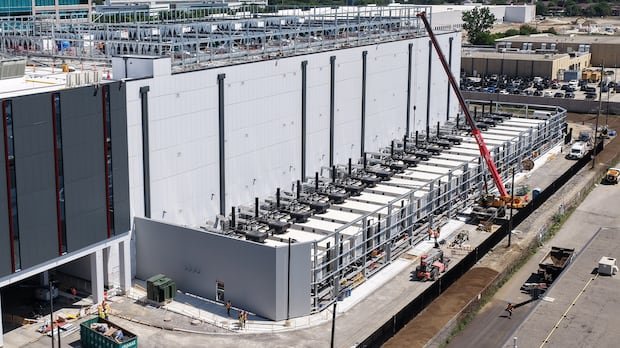
Ontario Premier Doug Ford unveiled the province’s fresh data center framework on Thursday, emphasizing the importance of keeping Canadians’ data within the country. The framework is built on three core principles: boosting economic development, ensuring data protection and sovereignty, and promoting community investment and public trust.
During the announcement in Guelph, Ford stated that the government’s new data center playbook aims to foster the economy of the future, generating substantial economic growth, increased tax revenues, and the creation of numerous new jobs while ensuring compliance with regulations.
Under the framework, data centers will be required to bear the full cost of their electricity consumption, encouraging projects to establish their own power generation sources. Additionally, a distinct rate class will be introduced for large new data centers, ensuring that no additional costs are shifted to Ontario residents.
The province emphasized that it will not provide financial incentives to attract investments, highlighting that the framework will act as a significant driver of its artificial intelligence (AI) strategy. This strategy is anticipated to deliver economic benefits, including a projected $122 billion in economic growth by 2035 and the establishment of 17,000 new jobs annually.
The announcement comes as various municipalities in the province deliberate on implementing moratoriums on data centers, with Oakville recently voting to enact a one-year moratorium, and Mississauga set to vote on a similar measure in September.
Green Party of Ontario leader Mike Schreiner, along with Ilham Abdulkadir of the Wellington Water Watchers group, has raised concerns about the environmental impact of data centers and their heavy reliance on resources such as water. Schreiner has called for a pause on data centers until stronger regulations are in place to protect communities.
In response, Ontario’s Minister of Economic Development Vic Fedeli assured that priority will be given to data centers utilizing closed-loop systems to minimize water consumption. Premier Ford also expressed support for prioritizing builds with closed-loop systems to significantly reduce water usage during operations.
Despite the government’s efforts, Schreiner criticized the playbook, stating that it lacks specific details and regulations to ensure sustainable practices. He emphasized the need for stronger protections for communities and called for a moratorium on new data center approvals until such safeguards are in place.
Looking ahead, Waterloo region is examining the local impacts of data centers, with Coun. Colleen James tabling a motion for a comprehensive information report to inform elected officials about the economic and environmental implications of data center expansion. The report is anticipated to be finalized early next year, addressing concerns raised by community stakeholders.