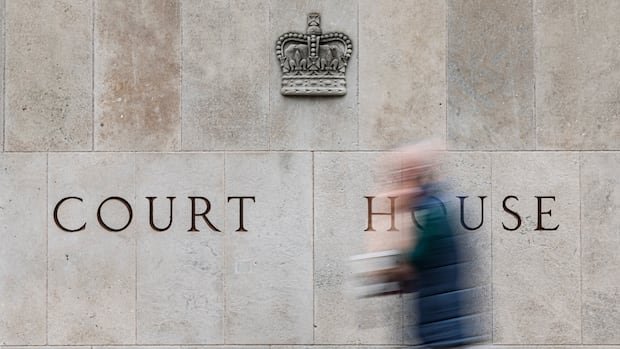
An Ontario Superior Court judge has granted bail to a woman accused of human trafficking without requiring a cash deposit, contrary to recent provincial regulations mandating full payment within 48 hours. Justice Scott Cowan in Milton released the woman on Wednesday after she and her guarantors pledged $11,000 and committed to payment.
The bail system in Ontario underwent changes this week, now necessitating individuals granted bail to furnish a cash security deposit upon release. Previously, forfeiture of the money was only required if the accused violated their release terms and the court demanded payment.
The alterations, introduced by Ontario’s Attorney General Doug Downey on August 14, came into effect on Monday. The Canadian Civil Liberties Association (CCLA) and the Criminal Lawyers’ Association (CLA) have jointly challenged the new rules, arguing that mandatory cash bail is unjust. According to Jessyca Greenwood, vice president of the CLA, federal law supersedes provincial laws in case of conflict. She emphasized that the Criminal Code empowers judges to grant bail with stringent conditions.
The legal challenge by the CCLA and CLA is scheduled for a court hearing next week. Greenwood asserted that forcing individuals to pay for bail is unconstitutional as it could prevent those lacking financial means from being released, which she deemed unfair.
Defense attorney Leora Shemesh, representing the woman, stated in an email that her client was released under strict conditions, emphasizing her innocence and the entitlement to bail based on the principles of justice. Shemesh clarified that the woman’s release was contingent on a promise to pay, with the provision for government seizure of the funds if bail conditions are breached, a longstanding aspect of the bail system.
In response to the judge’s decision, a spokesperson for Ontario Premier Doug Ford’s office, Hannah Jensen, highlighted that the new rules aim to safeguard the public by preventing violent offenders, including human traffickers, from being released swiftly after committing crimes. Jensen asserted that the changes are intended to make bail more meaningful and impactful to enhance victim and community protection.
The CCLA and CLA contended in a news release that the new cash bail system violates the Constitution, arguing that criminal procedure falls under federal jurisdiction and the Criminal Code grants justices discretion in imposing security deposits or cash bail. They criticized the province for attempting to override federal law and infringing on the Charter right to reasonable bail, suggesting that existing mechanisms for addressing bail violations through pledged amounts suffice, rendering unconstitutional laws unnecessary for administering the criminal justice system.