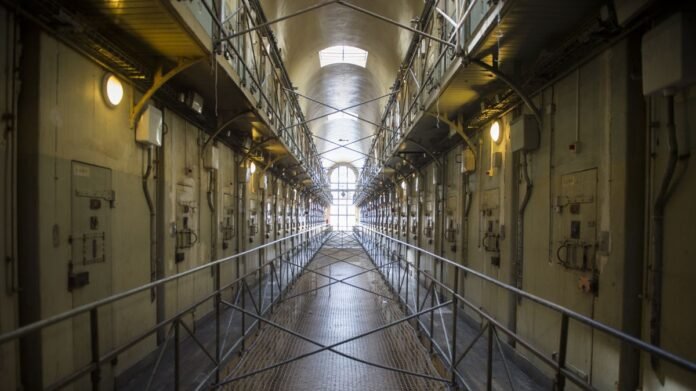
Former French President Nicolas Sarkozy has commenced serving a five-year prison term following his conviction for accepting millions of euros from the late Libyan dictator Muammar Gaddafi to finance his 2007 election campaign. The 70-year-old, who governed France from 2007 to 2012, has been incarcerated in a nine-square-meter cell at La Santé prison in Paris. This 19th-century facility has a grim past, having housed notorious criminals and witnessed guillotine executions until 1972. Notably, model agent Jean-Luc Brunel, associated with Jeffrey Epstein, was also held there before his demise in 2022 while facing sex-trafficking charges.
La Santé prison is notorious for its overcrowding, currently accommodating 1,243 inmates despite its intended capacity of 657, as per Justice Ministry data from August. France ranks poorly in terms of prison overcrowding in Europe, trailing only Slovenia and Cyprus, according to the Council of Europe.
Sarkozy is reportedly held in a single-occupancy cell within the isolation wing for his safety. Inmates in this section spend most of their time alone, with limited outdoor time and restricted communication between cells as outlined in a 2020 report by the Supervisor-General of Places of Deprivation of Liberty.
His cell is equipped with basic amenities including a toilet, shower, desk, small electric hob, and a TV that incurs a monthly fee. Additionally, he has the option to have a small fridge for a monthly charge.
Despite receiving police protection, Sarkozy faces threats from fellow inmates, as highlighted in a video circulating online. Ziad Takieddine, a key witness in the case, passed away under mysterious circumstances earlier this year while on the run. He was believed to have acted as the intermediary between Gaddafi and Sarkozy.
Sarkozy maintains his innocence and expressed his confidence in the truth prevailing while being transported to prison. His cell is reportedly situated in the “VIP” wing, designated for high-profile and at-risk inmates. His lawyer emphasized that despite the police presence, Sarkozy is not receiving preferential treatment within the prison.
Following his first night in prison, Sarkozy’s wife, Carla Bruni, described the experience as “terrifying” after speaking with him via phone. Family members are permitted three visits per week, and Sarkozy plans to occupy his time by reading books and writing about his incarceration experience. In September, he was convicted of criminal conspiracy for alleged financial arrangements with Libya to fund his 2007 campaign, a charge he has consistently refuted. An appeal has been lodged, and a decision on his conviction is pending within two months.

