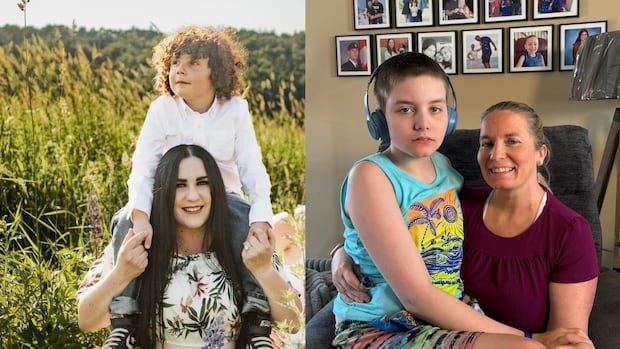
Chrystal Venator has implemented numerous security measures at her residence, including surveillance cameras, specialized door locks, and a doorbell that alerts her to any movement. These precautions are not aimed at keeping strangers out but rather at preventing her autistic and non-verbal son, Stalen, from wandering off unexpectedly. Stalen’s propensity to wander without warning poses a significant risk due to his lack of safety awareness, according to Venator. She stressed the urgency of the situation, highlighting how quickly incidents can unfold, even with brief distractions like attending to household chores or answering the door, leading to Stalen slipping away unnoticed.
The tragic loss of Parker Wells, an autistic and non-verbal child in Calgary, deeply affected Venator, resonating with her own fears for her son. Parker, aged eleven, went missing from his day home on July 16, triggering a massive search effort that sadly ended with the discovery of his remains. This heartbreaking event reinforced Venator’s resolve to join the Indigo Alert Initiative, a national campaign prompted by Parker’s fate. The initiative advocates for a public emergency system akin to Amber Alert but specifically tailored for cases where a vulnerable individual goes missing without involving an abduction.
The Indigo Alert Initiative, spearheaded by Jennifer Ball, aims to address the gap in emergency response for vulnerable populations, encompassing not just the autistic community but also individuals with cognitive conditions like dementia or Alzheimer’s. The initiative has garnered significant support, with over 38,000 signatures on a petition nationwide and backing from political figures. While provincial governments like New Brunswick have robust alert systems in place, the push for a new alert like Indigo Alert necessitates federal action.
Beyond alert systems, advocates stress the importance of public education to enhance awareness and response to incidents involving vulnerable individuals. Efforts like Project Lifesaver, which provides tracking bracelets for swift location of missing persons, offer a partial solution to the issue of wandering vulnerable individuals. However, challenges persist, with not all individuals being able to utilize such devices effectively due to sensory sensitivities.
Advocates like Jason Lai from the Autism Alliance of Canada underscore the need for community-driven initiatives to inform federal frameworks that prioritize safety, inclusion, and public understanding. As the advocacy for improved response systems continues, Lai encourages active engagement with policymakers to effect real change and ensure the protection of vulnerable groups in society.