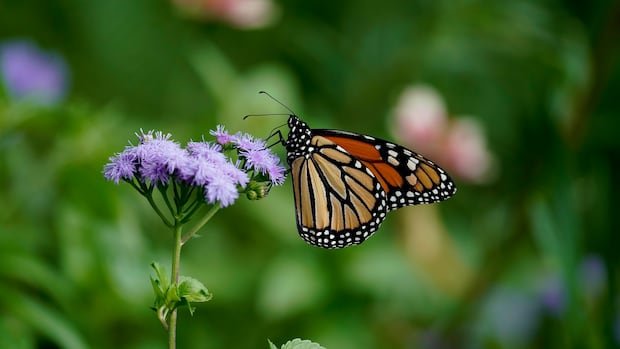
MaryAnn Lepp has observed a significant increase in monarch butterflies going through their transformative stages in her garden, with 20 caterpillars spotted feeding on her swamp milkweed in a single day. This surge in backyard milkweed growth amid favorable wet and hot conditions in parts of the Prairie has captured the attention of numerous Canadian monarch enthusiasts.
Excitedly scanning her garden in La Broquerie, approximately 60 kilometers southeast of Winnipeg, Lepp remarks, “This is chrysalis No. 2… I’m so thrilled.” She notes a higher presence of butterflies this year compared to previous years.
While conservation experts cannot definitively attribute the surge to weather conditions, they acknowledge the abundance of anecdotal reports detailing caterpillars, chrysalises, and monarch butterflies—a positive indication for the federally endangered species known for their remarkable annual migration between Canada and Mexico.
Marika Olynyk, curator of the Living Prairie Museum, notes an increased monarch population in Winnipeg, with consistent sightings of caterpillars, chrysalises, and butterflies throughout the summer. The museum’s tall grass prairie preserve is home to various native plants that attract pollinators, including different milkweed species.
Monarch butterflies primarily feed on nectar from milkweed flowers, although they can also opt for other flowering plants such as the meadow blazing star. However, during their caterpillar phase, monarchs exclusively consume milkweed leaves, highlighting their selective dietary habits.
Despite efforts by individuals like Lepp to plant milkweed and native wildflowers, these plants remain scarce compared to historical levels due to the conversion of native grasslands to farmland. Habitat loss poses the most significant threat to monarch populations, emphasizing the importance of conservation efforts.
In response to growing concerns, the Committee on the Status of Endangered Wildlife in Canada classified monarchs as endangered in 2016, leading to increased protection measures. The federal government followed suit in December 2023, making it illegal to harm or capture monarchs on federal lands at any stage of development.
To assess the monarch population’s status, researchers rely on estimating the acreage of trees covered by monarchs in their wintering grounds in Mexico. Despite heightened awareness and conservation initiatives, the monarch population remains at only half of its sustainable level, underscoring the ongoing need for protection.
Alongside the monarch resurgence, the Assiniboine Park Zoo’s native prairie garden has seen an increase in another critically endangered butterfly species, the Poweshiek skipperling. The zoo actively breeds and releases these butterflies in hopes of stabilizing their population, with recent sightings indicating progress towards recovery.
Laura Burns, conservation programs manager at the zoo, highlights the positive impact of conservation efforts on the Poweshiek skipperling population, emphasizing the role of favorable weather conditions in supporting butterfly populations.
Looking ahead, zoo staff plan to equip monarchs with radio transmitters this fall to track their migration to Mexico as part of a Canadian Wildlife Service project. Enthusiasts like Lepp remain dedicated to safeguarding caterpillars and chrysalises, emphasizing the importance of environmental conservation and fostering harmony with nature.
This commitment reflects a collective effort to protect these delicate species and preserve biodiversity for future generations.