Lady Gaga wowed a packed audience of 23,000 at the Manchester Co-op Live Arena this week with her exceptional talent and vibrant performance. Meanwhile, a stark contrast was evident just three miles away in another venue where a different lady, who once captured public fascination, left a sparse crowd reminiscing about the past.
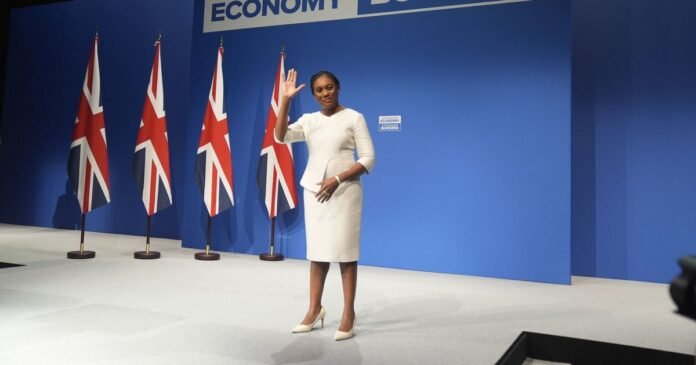
The presence of Lady Thatcher loomed over this year’s Conservative conference, creating an eerie atmosphere akin to a ghostly presence. The event featured displays of her iconic power suits in glass cases, a large mosaic of her face, and even a dedicated Thatcher Theatre. Attendees had the opportunity to purchase Thatcher-themed merchandise such as books, mugs, tea towels, and Christmas ornaments, while speakers repeatedly paid homage to her legacy.
The overall tone of the conference bordered on excessive adoration, with references to Thatcher’s bygone era appearing almost fetishistic given her passing over a decade ago. The speeches delivered were lackluster, exemplified by Chris Philp’s failed attempts at humor that left the audience cringing. Furthermore, a notable blunder was the misspelling of “Britain” as “Britian” on the complimentary chocolate bars distributed at the event.
In a bid to counter dismal polling results aligning them with the Liberal Democrats, shadow ministers unveiled a series of impractical and unfunded policy proposals. These included controversial plans to target liberal judges, reduce foreign aid, restrict human rights, conduct deportations, and significantly cut public sector services.
The party’s shift towards embracing ideologies reminiscent of figures like Boris Johnson and Donald Trump has raised eyebrows among observers. Questions arose about why such drastic measures were not implemented during their 14-year tenure, which left the country economically stagnant and public services in disarray.
Amidst discussions about “taking back the country,” critics pointed out the inconsistency of this narrative given past failures such as austerity measures, Brexit turmoil, and economic missteps. The party’s attempt to distance itself from recent missteps and cling to outdated ideals has drawn skepticism and criticism from both within and outside its ranks.
The week’s most memorable statement came from Robert Jenrick, a controversial figure within the party, who attempted to exploit a visit to Birmingham for political gain by highlighting the absence of white individuals in the area. This move was seen as opportunistic and divisive, reflecting a concerning trend within the party’s leadership.
As internal dissent grows and key figures defect, there are indications of a party in decline. The Tories’ reluctance to confront their troubled history and their reliance on outdated principles have placed them on a precarious path towards irrelevance. The prospect of aligning with fringe figures like Nigel Farage further underscores the party’s disconnect with modern values and societal expectations.
In conclusion, the Conservative party’s refusal to acknowledge past mistakes and adapt to changing times signals a looming downfall. As they grapple with internal strife and public backlash, the Tories risk being relegated to the sidelines of history due to their obstinacy, hubris, and deceitful practices.

